U.S. bolsters Asia ballistic missile defense as Trump-Kim summit nears

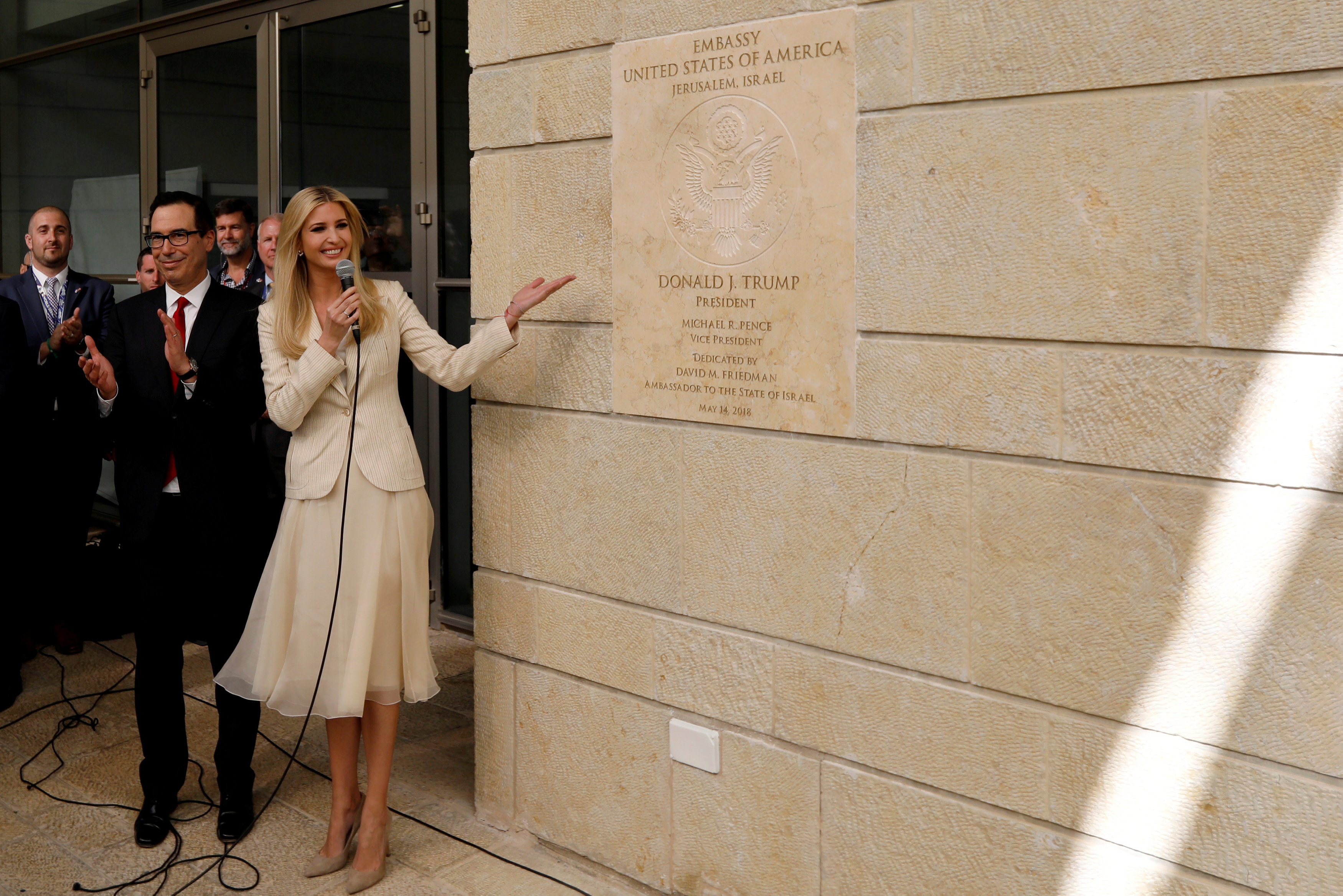
The U.S. guided-missile destroyer USS Milius (DDG69) arrives to join Forward Deployed Naval Forces at the U.S. naval base in Yokosuka, Japan May 22, 2018. REUTERS/Issei Kato

By Tim Kelly

YOKOSUKA, Japan (Reuters) – The USS Milius, one of the U.S. Navy’s most advanced guided missile destroyers, arrived in Japan on Tuesday to reinforce defenses against any ballistic missile attacks by North Korea, or anyone else in East Asia.

The warship’s arrival at Yokosuka Naval Base comes three weeks before an unprecedented meeting is supposed to take place in Singapore between U.S. President Donald Trump and North Korean leader Kim Jong Un.

The U.S. guided-missile destroyer USS Milius (DDG69) arrives to join Forward Deployed Naval Forces at the U.S. naval base in Yokosuka, Japan May 22, 2018. REUTERS/Issei Kato

The U.S. guided-missile destroyer USS Milius (DDG69) arrives to join Forward Deployed Naval Forces at the U.S. naval base in Yokosuka, Japan May 22, 2018. REUTERS/Issei Kato

The show of force is a reminder of the military pressure that can be brought to bear on North Korea as the United States seeks to press it to abandon its nuclear weapons and its ballistic missile program.

The deployment of the Milius to Japan was delayed by almost a year so it could undergo upgrades to its Aegis air defense system to enhance its ability to detect and target missiles.

Armed with missiles designed to shoot down warheads in space, the Milius will be part of a naval destroyer force that would be the first U.S. line of defense against any long-range ballistic missiles fired at it by North Korea.

The force, under a security treaty between Japan and the United States, would also defend Japan from attack.

“What the Milius has now is the latest and greatest upgrade for the combat system,” Commander Jennifer Pontius, the ship’s captain, said in Yokosuka after her ship docked.

“It creates increased capacity in various mission areas such as ballistic missile defense, electronic warfare, undersea warfare and air warfare.”

The Milius’s dockside welcome under a bright afternoon sky in Yokosuka, the headquarters of the U.S. Seventh Fleet, came amid uncertainty over whether the Trump-Kim meeting will go ahead.

North Korea said last week it was reconsidering the summit after calling off separate talks with South Korea in a protest over U.S.-South Korean air combat drills known as Max Thunder.

North Korea said it would walk away from dialogue if the United States insisted on it unilaterally abandoning its nuclear arsenal, which it says it needs to defend itself against U.S. aggression.

Family members of a crew hold signs, upon the arrival the U.S. guided-missile destroyer USS Milius (DDG69), that joins Forward Deployed Naval Forces at the U.S. naval base in Yokosuka, Japan May 22, 2018. REUTERS/Issei Kato

Family members of a crew hold signs, upon the arrival the U.S. guided-missile destroyer USS Milius (DDG69), that joins Forward Deployed Naval Forces at the U.S. naval base in Yokosuka, Japan May 22, 2018. REUTERS/Issei Kato

Trump has warned that failure to reach a denuclearisation agreement could lead to “decimation” of Kim’s rule.

The Milius joins two other ships in the Seventh Fleet with similar upgrades and reinforces the fleet after two other U.S. warships in the region were crippled in collisions with commercial ships last year.

With the Milius, the U.S. Navy has 13 ships based at Yokosuka, including the USS Ronald Reagan, Washington’s only forward deployed carrier.

(Reporting by Tim Kelly; Editing by Robert Birsel)

Trump presses China on North Korea border ahead of summit

FILE PHOTO: U.S. President Donald Trump gestures as he delivers remarks during the Prison Reform Summit at the White House in Washington, DC, U.S., May 18, 2018. REUTERS/Kevin Lamarque/File Ph

WASHINGTON (Reuters) – U.S. President Donald Trump on Monday urged China on Monday to maintain a secure border with North Korea, pressing Beijing ahead of his anticipated meeting with North Korean leader Kim Jong Un next month aimed at denuclearization.

“China must continue to be strong & tight on the Border of North Korea until a deal is made. The word is that recently the Border has become much more porous and more has been filtering in. I want this to happen, and North Korea to be VERY successful, but only after signing!” Trump tweeted.

He did not elaborate on the significance of the North Korea-China border issue in any deal that might be reached on denuclearization. Trump has said his meeting with Kim will take place on June 12 in Singapore.

Pyongyang last week threatened to scrap any meeting if Washington continued to press for unilateral denuclearization.

In response, Trump said that as far as he knew, the meeting was still on track and sought to placate Kim by saying the North Korean leader would be protected as part of any deal.

Last week, Trump told reporters at the White House that the Kim was possibly being influenced by Beijing, North Korea’s main ally, after two recent visits he made to China.

(Reporting by Susan Heavey; Editing by Chizu Nomiyama and Frances Kerry)

North Korea ‘declines’ South Korea media for nuclear site event; China urges ‘stability’

FILE PHOTO: North Korean leader Kim Jong Un and South Korean President Moon Jae-in deliver a statement at the truce village of Panmunjom inside the demilitarized zone separating the two Koreas, South Korea, April 27, 2018. Korea Summit Press Pool/Pool via Reuters

By Heekyong Yang

SEOUL (Reuters) – North Korea has declined to accept a list of South Korean journalists hoping to observe the closure of its nuclear test site, South Korea said on Friday, raising new questions about the North’s commitment to reducing tension.

North Korea had invited a limited number of journalists from South Korea and other countries to witness what it said will be the closing of its only nuclear weapons test site at Punggye-ri next week.

The North Korean offer to scrap the test site has been seen as major concession in months of easing tension between it, on the one hand, and South Korea and the United States on the other.

But the remarkable progress appears to have been checked in recent days with North Korea raising doubts about an unprecedented June 12 summit in Singapore between leader Kim Jong Un and U.S. President Donald Trump, and calling off talks with the South.

The South Korean Unification Ministry, which handles dealings with the North, said on Friday North Korea had “declined to accept” the list of journalists submitted by the South for the test site dismantling.

The ministry did not elaborate but the North Korean decision is likely to raise doubts about its plan for the test site.

Trump on Thursday sought to placate North Korea after it threatened to call off the June summit, saying Kim’s security would be guaranteed in any deal and his country would not suffer the fate of Muammar Gaddafi’s Libya, unless that could not be reached.

North Korea had said on Wednesday it might not attend the Singapore summit if the United States continued to demand it unilaterally abandon its nuclear arsenal, which it has developed in defiance of U.N. Security Council resolutions to counter perceived U.S. hostility.

On Thursday, North Korea’s chief negotiator called South Korea “ignorant and incompetent” and denounced U.S.-South Korean air combat drills and threatened to halt all talks with the South.

Trump, in rambling remarks in the White House’s Oval Office, said as far as he knew the summit was still on track, but that the North Korean leader was possibly being influenced by Beijing.

But he also stressed that North Korea would have to abandon its nuclear weapons and warned that if no deal was reached, North Korea could be “decimated” like Libya or Iraq.

‘PEACEFUL MEANS’

China, responding to U.S. President Donald Trump suggestion that Beijing may be influencing North Korea’s new hardline stance, said on Friday it stands for stability and peace on the Korean peninsula and for settlement of confrontation over its development of weapons through talks.

Chinese foreign ministry spokesman Lu Kang, asked about Trump’s comments, said China’s position had not changed and he reiterated that it supported the goal of denuclearisation on the Korean peninsula.

“We are consistently supporting all relevant parties in resolving the peninsula issue through political consultations and peaceful means,” Lu told a regular briefing.

Kim has made two visits to China recently for talks with President Xi Jinping, including a secretive train trip to Beijing in late March, his first known visit outside North Korea since coming to power.

He flew to the port city of Dalian this month.

Both times, Kim’s encounters with Xi were cast by Chinese state media as friendly. They included beachside strolls and Xi saying that previous generations of North Korean and Chinese leaders had visited each other as often as relatives.

The warmth between the two leaders marks a sharp reversal in what had been months of frosty ties, as China ratcheted up sanction pressure on North Korea in response to its relentless missiles and nuclear tests last year.

China is North Korea’s largest trading partner and considers it an important security buffer against the U.S. military presence in region.

What had seemed until this week to be rapidly warming ties between North Korea, on the one hand, and South Korea and the United States on the other, had fueled fears in Beijing that it might be left out of a new deal on the peninsula, according to analysts.

(Additonal reporting by Micheal Martina, in BEIJING; Writing by Christian Shepherd; Editing by Josh Smith, Robert Birsel)

Maersk latest company to shun Iran as EU scrambles to save nuclear deal

FILE PHOTO: The Maersk ship Adrian Maersk is seen as it departs from New York Harbor in New York City, U.S., June 27, 2017. REUTERS/Brendan McDermid/File Phot

COPENHAGEN (Reuters) – Shipping group A.P. Moller-Maersk on Thursday joined a growing list of companies preparing to call a halt to doing business with Iran, casting doubts on whether European leaders can keep alive a nuclear deal with Tehran.

Maersk’s move comes a day after French energy group Total and other European companies signaled they could exit Iran ahead of a reimposition of sanctions following the United States’ decision to pull out of the Iran accord.

French President Emmanuel Macron said on Thursday that the European Union must protect European Union companies doing business with Iran from U.S. sanctions.

But Macron, joining EU leaders for a summit in Bulgaria, also said he recognized that big companies would want to protect their own interests.

“International companies with interests in many countries make their own choices according to their own interests. They should continue to have this freedom,” he said.

U.S. President Donald Trump’s decision to abandon the 2015 nuclear accord with Iran means European countries that have since invested in the country will be at risk once new sanctions come into effect.

Maersk Chief Executive Soren Skou said: “With the sanctions the Americans are to impose, you can’t do business in Iran if you also have business in the U.S., and we have that on a large scale.”

“I don’t know the exact timing details, but I am certain that we’re also going to shut down (in Iran),” Skou told Reuters in an interview following Maersk’s first-quarter earnings.

MSC, the world’s second biggest container shipping group after Maersk, said on Wednesday it would stop taking new booking for Iran.

Other companies which have warned they would wind down business in Iran following reinstated sanctions include German insurer Allianz, Siemens and Danish oil product tanker operator Maersk Tankers, previously owned by the Maersk conglomerate.

Maersk’s Skou said higher oil prices which followed the U.S. withdrawal were hitting its container shipping business because of higher bunker fuel prices.

Oil prices hit their highest level since November 2014 on Thursday, with Brent crude creeping ever closer to $80 per barrel. [O/R]

(Reporting by Stine Jacobsen and Jacob Gronholt-Pedersen; Editing by Jon Boyle and Jane Merriman)

North Korea says won’t hold talks with ‘incompetent’ South unless differences settled

FILE PHOTO: A North Korean flag flutters on top of a 160-metre tower in North Korea's propaganda village of Gijungdong, in this picture taken from the Tae Sung freedom village near the Military Demarcation Line (MDL), inside the demilitarised zone separating the two Koreas, in Paju, South Korea, April 24, 2018. REUTERS/Kim Hong-Ji

By Joyce Lee and Heekyong Yang

SEOUL (Reuters) – North Korea’s chief negotiator called the South Korean government “ignorant and incompetent” on Thursday, denounced U.S.-South Korean air combat drills and threatened to halt all talks with the South unless its demands are met.

The comments by Ri Son Gwon, chairman of North Korea’s Committee for the Peaceful Reunification of the country, were the latest in a string of inflammatory statements marking a drastic change in tone after months of easing tension with plans for denuclearisation and a summit scheduled with the United States.

Ri criticized the South for participating in the drills, as well as for allowing “human scum” to speak at its National Assembly, the North’s KCNA news agency said in a statement.

“Unless the serious situation which led to the suspension of the north-south high-level talks is settled, it will never be easy to sit face to face again with the present regime of south Korea,” the statement said.

It did not elaborate.

KCNA, in its English-language service, deliberately uses lower-case “north” and “south” to show that it only recognises one undivided Korea.

North Korea on Wednesday said it might not attend the June 12 summit between leader Kim Jong Un and U.S. President Donald Trump in Singapore if the United States continued to demand it unilaterally abandon its nuclear arsenal, which it has developed in defiance of U.N. Security Council resolutions to counter perceived U.S. hostility.

A South Korean presidential Blue House official said the South intends to more actively perform “the role of a mediator” between the United States and North Korea, but that goal has been cast into doubt by Ri’s comments.

“On this opportunity, the present south Korean authorities have been clearly proven to be an ignorant and incompetent group devoid of the elementary sense of the present situation,” Ri’s statement said.

The statement did not identify the “human scum” by name, but Thae Yong Ho, a former North Korean diplomat to Britain who defected to the South in 2016, held a press conference on Monday at the South Korean National Assembly for his publication of his memoir.

In his memoir, “Password from the Third Floor”, Thae describes North Korean leader Kim as “impatient, impulsive and violent”.

SUMMIT IN DOUBT

South Korean Foreign Minister Kang Kyung-wha told parliament that North Korea and the United States had differences of views over how to achieve denuclearisation. Trump acknowledged on Wednesday it was unclear if the summit would go ahead.

“It is true that there are differences of opinion between the North and the United States on methods to accomplish denuclearisation,” Kang told lawmakers, according to Yonhap News Agency.

Trump will host South Korean President Moon Jae-in at the White House on May 22.

The Blue House intends to “sufficiently convey (to the United States) what we’ve discerned about North Korea’s position and attitude… and sufficiently convey the United States’ position to North Korea”, thereby helping to bridge the gap, the official said.

Asked if she trusted Kim Jong Un, South Korean Foreign Minister Kang said: “Yes.”

Japan’s Asahi newspaper reported that the United States had demanded North Korea ship some nuclear warheads, an intercontinental ballistic missile and other nuclear material overseas within six months.

The newspaper, citing several sources familiar with North Korea, said U.S. Secretary of State Mike Pompeo appeared to have told the North Korean leader when they met this month that Pyongyang might be removed from a list of state sponsors of terrorism if it complied.

The Asahi also reported that if North Korea agreed to complete, verifiable and irreversible denuclearisation at the Singapore summit, Washington was considering giving guarantees for Kim’s regime.

China’s top diplomat, Wang Yi, said the measures North Korea has taken to ease tension should be acknowledged, and all other parties, especially the United States, should cherish the opportunity for peace.

Cancellation of the summit, the first between U.S. and North Korean leaders, would deal a major blow to what could be the biggest diplomatic achievement of Trump’s presidency.

This comes at a time his withdrawal from the Iran nuclear deal has drawn criticism internationally and moving the U.S. embassy in Israel to Jerusalem has fueled deadly violence on the Israel-Gaza border.

North Korea defends its nuclear and missile programs as a deterrent against perceived aggression by the United States, which keeps 28,500 troops in South Korea, a legacy of the 1950-53 Korean War, which ended in a truce, not a peace treaty.

The North has long said it is open to eventually giving up its nuclear arsenal if the United States withdraws its troops from South Korea and ends its “nuclear umbrella” alliance with Seoul.

North Korea said it was pulling out of the talks with South Korea after denouncing U.S.-South Korean “Max Thunder” air combat drills, which it said involved U.S. stealth fighters, B-52 bombers and “nuclear assets”.

Speaking to reporters in Brussels on Wednesday, U.N. Secretary-General Antonio Guterres said: “I hope that in the end common sense will prevail, and the summit will take place and it will be successful.”

(Additional reporting by Kaori Kaneko in TOKYO and Michael Martina in BEIJING, and Cynthia Kim, Ju-min Park and Josh Smith in SEOUL; Editing by Nick Macfie)

North Korea says may reconsider summit with Trump, suspends talks with South

FILE PHOTO - South Korean President Moon Jae-in and North Korean leader Kim Jong Un attend a banquet on the Peace House at the truce village of Panmunjom inside the demilitarized zone separating the two Koreas, South Korea, April 27, 2018. Korea Summit Press Pool/Pool via Reuters

By Christine Kim and Josh Smith

SEOUL (Reuters) – North Korea threw next month’s summit between Kim Jong Un and U.S. President Donald Trump into doubt on Wednesday, threatening weeks of diplomatic progress by saying it may reconsider if Washington insists it unilaterally gives up its nuclear weapons.

The North’s official KCNA news agency said earlier Pyongyang had called off high-level talks with Seoul, which had been due on Wednesday, in the first sign of trouble after months of warming ties.

Citing first vice minister of foreign affairs Kim Kye Gwan, KCNA later said the fate of the unprecedented U.S.-North Korea summit, as well as bilateral relations, “would be clear” if the United States spoke of a “Libya-style” denuclearisation for the North.

“If the U.S. is trying to drive us into a corner to force our unilateral nuclear abandonment, we will no longer be interested in such dialogue and cannot but reconsider our proceeding to the DPRK-U.S. summit,” Kim Kye Gwan said, referring to the North by its official name, the Democratic People’s Republic of Korea.

The United States was still hopeful about the summit, scheduled for Singapore on June 12, but also prepared for a tough negotiation process, White House spokeswoman Sarah Sanders said.

“We’re still hopeful that the meeting will take place and we’ll continue down that path, but at the same time we’ve been prepared that these could be tough negotiations,” Sanders said in an interview with Fox News.

“The president is ready if the meeting takes place. If it doesn’t, we’ll continue the maximum pressure campaign that’s been ongoing.”

Vice Minister Kim specifically criticized U.S. national security adviser John Bolton, who has called for North Korea to quickly give up its nuclear arsenal in a deal that mirrors Libya’s abandonment of its weapons of mass destruction.

North Korea clashed with Bolton when he worked under the Bush administration, calling him “human scum” and a “bloodsucker”.

“We shed light on the quality of Bolton already in the past, and we do not hide our feeling of repugnance towards him,” Kim said.

The North Korean statement, as well its cancellation of the talks with the South due to U.S.-South Korean military exercises, mark a dramatic reversal in tone from recent months when both sides embraced efforts to negotiate.

North Korea had announced it would publicly shut its nuclear test site next week.

‘THREATS AND BLACKMAIL’

U.S. Secretary of State Mike Pompeo said on Sunday the United States would agree to lift sanctions on North Korea if it agreed to completely dismantle its nuclear weapons program.

However, Kim Kye Gwan’s statement appeared to reject that, saying North Korea would never give up its nuclear program in exchange for trade with the United States.

“We have already stated our intention for denuclearisation of the Korean peninsula and made clear on several occasions that precondition for denuclearisation is to put an end to anti-DPRK hostile policy and nuclear threats and blackmail of the United States,” Kim said.

North Korea has always defended its nuclear and missile programs as a necessary deterrent against perceived aggression by the United States, which keeps 28,500 troops in South Korea, a legacy of the 1950-53 Korean War.

North Korea has long said it is open to eventually giving up its nuclear arsenal if the United States withdraws its troops from South Korea and ends its “nuclear umbrella” security alliance with Seoul, though South Korean officials have said the North may be willing to compromise.

The United States has insisted on complete, verifiable, and irreversible dismantling of North Korea’s nuclear weapons and the facilities needed to build the weapons as soon as possible.

Asian stock markets dipped after North Korea called off the talks with the South. Cancellation of the Singapore summit could see tension flare again even as investors worry about China-U.S. trade friction.

South Korean Foreign Minister Kang Kyung-hwa spoke to Pompeo by telephone and discussed North Korea’s postponement of the talks with the South, the foreign ministry said in a statement.

Pompeo told Kang Washington would continue to make preparations for the U.S-North Korea summit, bearing in mind the recent action by North Korea, it said.

Kim Kye Gwan’s statement came hours after North Korea pulled out of talks with the South after denouncing the U.S.-South Korean “Max Thunder” air combat drills, which it said involved U.S. stealth fighters, B-52 bombers and “nuclear assets”, as a provocation.

American stealth F-22 fighters were spotted in South Korea earlier in May, but a spokesman for the U.S. military command in South Korea said no B-52s were scheduled to take part in the drills.

A South Korean defense ministry official said the drills would go on as planned and were not aimed at any third party.

‘MISERABLE FATE’

Cancellation of the summit, the first meeting between a serving U.S. president and a North Korean leader, would deal a major blow to what would be the biggest diplomatic achievement of Trump’s presidency.

Trump has raised expectations for success even as many analysts have been skeptical about the chances of bridging the gap due to questions about North Korea’s willingness to give up a nuclear arsenal that it says can hit the United States.

Kim Kye Gwan derided as “absurd” Bolton’s suggestion that discussions with North Korea should be similar to those that led to components of Libya’s nuclear program being shipped to the United States in 2004.

“(The) world knows too well that our country is neither Libya nor Iraq which have met miserable fate,” Kim said.

He said North Korea was a nuclear weapon state while Libya had been at the initial stage of nuclear development.

A U.S. government expert on North Korea said Kim Jong Un may also be trying to gauge whether Trump was willing to walk away from the meeting.

Joshua Pollack, of the Middlebury Institute of International Studies in California, said Pyongyang appeared irritated by the U.S. administration’s vow to maintain sanctions in spite of North Korean concessions.

“The North Koreans want a change in tone from the U.S., and at least so far, they’re not hearing one,” he said.

The doubt thrown over the summit comes a week after Trump abandoned the 2015 nuclear deal between Iran and six world powers, under which Tehran curbed its nuclear program in exchange for the lifting of most international sanctions.

China said on Wednesday all parties “should show goodwill and avoid mutual provocation” to create a conducive atmosphere for denuclearisation on the Korean peninsula.

The North-South talks had been due to focus on plans to implement a declaration that emerged from an inter-Korea summit last month, including promises to formally end the Korean War and pursue “complete denuclearisation”.

South Korea described the North’s decision as “regrettable”.

(Reporting by Josh Smith and Christine Kim in SEOUL, Tim Kelly in TOKYO, Philip Wen and Christian Shepherd in BEIJING, and David Brunnstrom, Phillip Stewart, Tim Ahmann, Matt Spetalnick and Lesley Wroughton, Doina Chiacu in WASHINGTON; Editing by Paul Tait and Robert Birsel)

Israeli joy, Palestinian fury over U.S. embassy launch in Jerusalem

Palestinian demonstrators run for cover during a protest against U.S. embassy move to Jerusalem and ahead of the 70th anniversary of Nakba, at the Israel-Gaza border in the southern Gaza Strip May 14, 2018. REUTERS/Ibraheem Abu Mustafa

By Dan Williams

JERUSALEM (Reuters) – The crowd sported branded baseball caps and Israel’s prime minister wore red, white and blue as the United States opened its embassy in Jerusalem on Monday, delighting Israelis and deepening Palestinian anger.

“Our greatest hope is for peace,” U.S. President Donald Trump said in a recorded video message, even as a spokesman for the Palestinian president accused him of sowing instability by overturning decades of U.S. policy on the status of the city.

The inauguration of the embassy, after Trump outraged the Arab world and stoked international concern by recognising Jerusalem as Israel’s capital in December, was hailed by Israeli Prime Minister Benjamin Netanyahu as a “glorious day”.

Trump opted not to attend the ceremony in which a U.S. consular building was re-purposed into an embassy, pending the construction of a new facility, probably years away.

His daughter Ivanka and son-in-law Jared Kushner, both White House advisers, were there, seated next to Netanyahu opposite a stage with a backdrop of U.S. and Israeli flags. Two American pastors and a rabbi gave invocations.

Kushner, in a rare public speech, said the relocation from Tel Aviv, a diplomatically and politically sensitive step promised but never implemented by a succession of U.S. presidents, showed that Trump was a man of his word.

The comments were telling, just a week after Trump announced Washington’s withdrawal from the nuclear deal between Iran and world powers, a move that critics said weakened global trust in the United States.

GAZA VIOLENCE

“When President Trump makes a promise, he keeps it,” Kushner said, a reference to a campaign pledge to open a Jerusalem embassy. “Today also demonstrates American leadership. By moving our embassy to Jerusalem, we have shown the world once again that the United States can be trusted.”

Palestinians, with broad international backing, seek East Jerusalem as the capital of a state they want to establish in the occupied West Bank and the Gaza Strip.

Israel regards all of the city, including the eastern sector it captured in the 1967 Middle East war and annexed, as its “eternal and indivisible capital”. The Trump administration has avoided that description, and noted that the city’s final borders should be decided by the parties.

The crowd, many wearing the caps marked “U.S. Embassy, Jerusalem, Israel” rose for numerous standing ovations. Attendants handed out pretzels and mineral water.

A smiling Netanyahu, decked out in U.S. colours – a blue suit, white shirt and red tie – showered praise on Trump, a president with whom he is in lockstep on many regional issues.

Thanking Trump for “having the courage” to move the embassy, Netanyahu said: “This is a great day. A great day for Jerusalem. A great day for the state of Israel. A day that will be engraved in our national memory for generations.”

Split screens on Israeli television stations showed a more complex story.

As coverage of the embassy ceremony ran on one side of the screen, the other broadcast the violence along Israel’s border with Gaza, where dozens of Palestinian protesters were killed by Israeli gunfire.

Amid expressions of international concern and condemnation over the use of live ammunition, Israel said it was taking the necessary measures to prevent any breach of its border fence with the enclave run by the militant Hamas movement.

Kushner, echoing the Netanyahu government’s position that the six weeks of Gaza protests were being orchestrated by Hamas Islamists opposed to Israel’s existence, said: “Even today those provoking violence are part of the problem and not part of the solution.”

(Editing by Jeffrey Heller and Andrew Heavens)

United States opens its Israeli embassy in Jerusalem

U.S. marines take part in the dedication ceremony of the new U.S. embassy in Jerusalem, May 14, 2018. REUTERS/Ronen Zvulun

JERUSALEM (Reuters) – The United States officially opened its embassy to Israel in Jerusalem on Monday, fulfilling a pledge by President Donald Trump who has recognized the holy city as the Israeli capital.

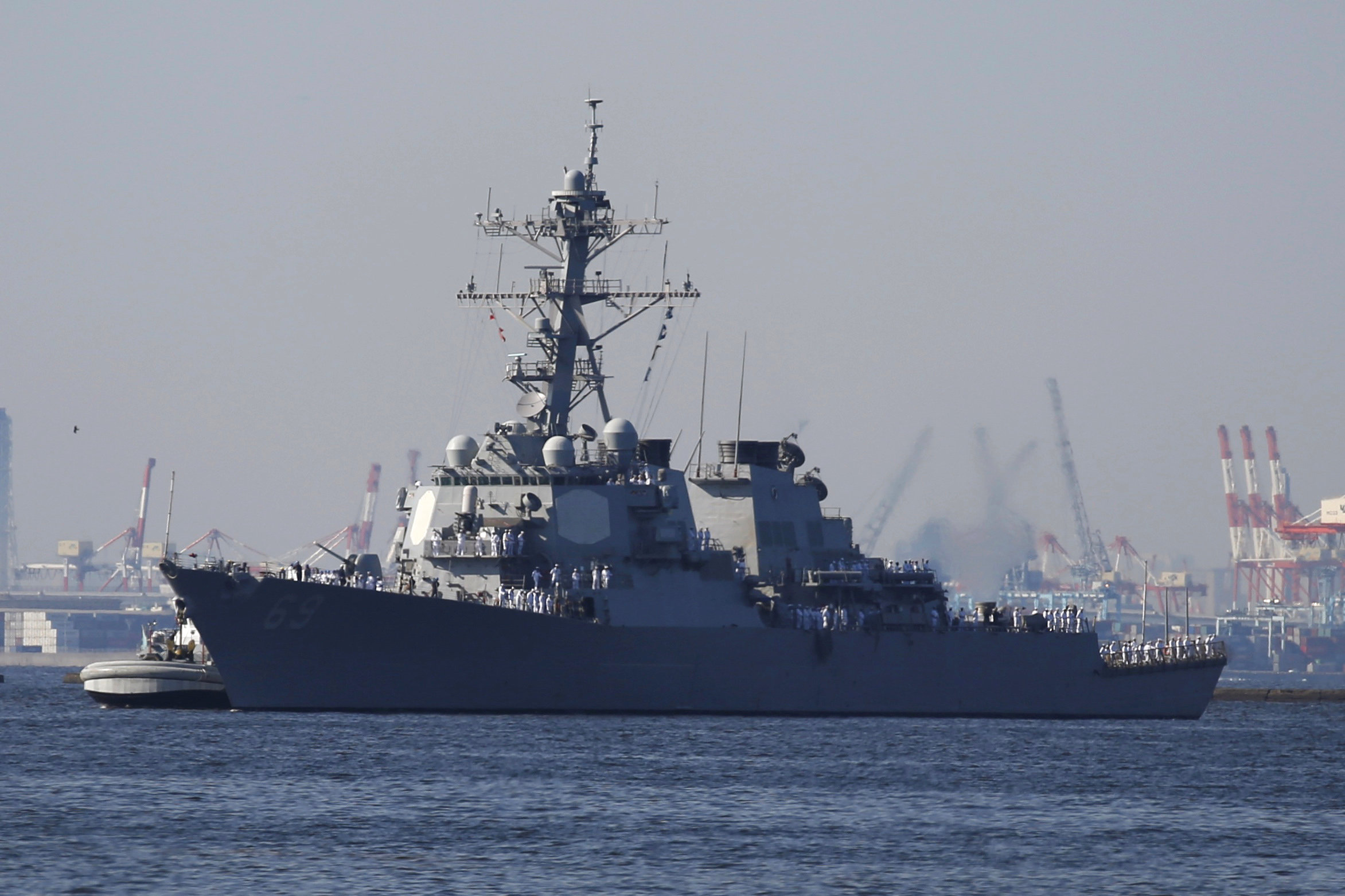
Senior White House Adviser Ivanka Trump and U.S. Treasury Secretary Steven Mnuchin stand next to the dedication plaque at the U.S. embassy in Jerusalem, during the dedication ceremony of the new U.S. embassy in Jerusalem, May 14, 2018. REUTERS/Ronen Zvulun

Senior White House Adviser Ivanka Trump and U.S. Treasury Secretary Steven Mnuchin stand next to the dedication plaque at the U.S. embassy in Jerusalem, during the dedication ceremony of the new U.S. embassy in Jerusalem, May 14, 2018. REUTERS/Ronen Zvulun

“Today we open the United States embassy in Jerusalem, Israel,” U.S. ambassador to Israel David Friedman said at the beginning of the inaugural ceremony, attended by a

U.S.delegation from Washington and Israeli


leaders.

On the Gaza border, at least 38 Palestinians were killed by Israeli gunfire in the latest in a round of protests dubbed the “Great March of Return”, health officials said.

Trump’s recognition of contested Jerusalem as Israel’s capital in December outraged Palestinians, who said the United States could no longer serve as an honest broker in any peace process with Israel.

Israeli Prime Minister Benjamin Netanyahu, his wife Sara Netanyahu and Senior White House Advisers Jared Kushner and Ivanka Trump applaud during the dedication ceremony of the new U.S. embassy in Jerusalem, May 14, 2018. REUTERS/Ronen Zvulun

Israeli Prime Minister Benjamin Netanyahu, his wife Sara Netanyahu and Senior White House Advisers Jared Kushner and Ivanka Trump applaud during the dedication ceremony of the new U.S. embassy in Jerusalem, May 14, 2018. REUTERS/Ronen Zvulun

Palestinians seek East Jerusalem as the capital of a state they want to establish in the occupied West Bank and the Gaza Strip.

Israel regards all of the city, including the eastern sector it captured in the 1967 Middle East war and annexed, as its “eternal and indivisible capital” in a move that has not won international recognition.

(Reporting by Ari Rabinovitch, Editing by Jeffrey Heller, Editing by William Maclean)

Trump, Kim summit in Singapore presents logistical challenges for North Korea

Office workers walk to the train station during evening rush hour in the financial district of Singapore March 9, 2015. REUTERS/Edgar Su/Files

By Jack Kim and Jamie Freed

SINGAPORE (Reuters) – North Korean leader Kim Jong Un’s trip to Singapore for talks with U.S. President Donald Trump poses logistical challenges that are likely to include using Soviet-era aircraft to carry him and his limousine, as well as dozens of security and other support staff.

The choice of Singapore as the site of the first-ever meeting of a sitting U.S. president and a North Korean leader was as much because it was within reasonable flight time and distance from Pyongyang as because of the island state’s political neutrality, a South Korean presidential official told reporters.

Since becoming North Korea’s leader in 2011, Kim has only taken one known overseas trip by air – and that was earlier this week to Dalian in China to hold talks with Chinese President Xi Jinping. He flew in his personal Ilyushin-62M jet accompanied by a cargo plane that people with knowledge of North Korean affairs say is believed to have carried his limousine.

“It looks very much like the trip to Dalian was a dry run,” said Andray Abrahamian, a research fellow at Pacific Forum CSIS and formerly with Choson Exchange, a Singapore-based group that trains North Koreans in business skills.

At 4,700 km from Pyongyang’s Sunan airport, Singapore is easily in the range of the Il-62M aircraft. The Soviet-era narrow-body jet with four engines was first introduced in the 1970s and has a maximum range of 10,000 km.

But the Ilyushin-76 cargo plane cannot fly more than 3,000 km without refueling if carrying a full load. It will therefore have to stop off at a friendly location like Vietnam’s capital on the way to Singapore or fly with a reduced load.

The Il-76, originally designed for moving heavy machinery to remote parts of the Soviet Union, is big enough to fit a school bus or two shipping containers inside it, according to passenger and cargo flight operator Antarctic Logistics & Expeditions.

But the cargo plane has had some safety issues. In the latest incident last month, a crash killed 257 people on board after takeoff from an Algiers air base.

Unlike his father Kim Jong Il, who died in 2011 and who traveled by armored train on his rare trips abroad because he feared being shot down, according to a North Korean defector familiar with his security details, the younger leader is not known to be averse to flying.

But air travel of this distance does pose a significantly greater challenge in transporting communication and security equipment and personnel needed to back up a summit meeting.


SUITE FIT FOR A LEADER

Lee Yun-keok, a defector who had worked for the North’s government and now heads the North Korea Strategic Information Service Center in Seoul, said the trip will involve dozens of security personnel and equipment including possibly a personal toilet for the leader.

It will also mean burning a large quantity of jet fuel, a refined oil product sharply limited by U.N. sanctions targeting North Korea’ imports. Kim’s two planes will need around 50 metric tons of jet fuel per aircraft for the flight from Pyongyang to Singapore.

China, the main source of fuel for the North, exported just 3 tons of jet fuel in March and made no official exports the two previous months, according to Chinese customs data.

But the North’s planes can pick up extra fuel when they fly to China and Russia for commercial operations, and international security experts believe the North may have been stockpiling the fuel which it has also used for its missile program.

“The United States had preferred Geneva,” the South Korean presidential official told reporters, requesting anonymity to discuss the arrangements for the summit meeting.

“But Singapore was selected as it was the most realistically viable destination Kim Jong Un could probably travel when considering the travel time and flight distance.”

The two sides initially considered meeting in the Panmunjom truce village straddling the Korean military border, the scene of the third inter-Korea summit attended by Kim and South Korean President Moon Jae-in last month, the official said. The official said the South did not know the reason why Panmunjom was dropped.

There was no confirmation on the specific location for the meeting between Kim and Trump although there are a number of sites in Singapore that can guarantee security protection, including hotels that have experience hosting high-security events, Singapore media and a Singapore government official said.

The meeting is scheduled for one day on June 12, but if either or both of the leaders decide to stay overnight, there is only one hotel room in all of the city that meets “security protocol” for the U.S. president, according to a source with knowledge of previous U.S. presidential visits.

That is the 348-square meter Shangri-la Suite in the Valley Wing of the hotel of the same name, at a current rate of S$10,000 ($7,500) a night for June 12.

($1 = 1.3348 Singapore dollars)

(Additional reporting by Dewey Sim in Singapore, Christine Kim and Joori Roh in Seoul; Edited by Martin Howell)

Trump says to meet with North Korea’s Kim on June 12 in Singapore

FILE PHOTO - A combination photo shows a Korean Central News Agency (KCNA) handout of Kim Jong Un released on May 10, 2016, and Donald Trump posing for a photo in New York City, U.S., May 17, 2016. REUTERS/KCNA handout via Reuters/File Photo & REUTERS/Lucas Jackson/File Photo

WASHINGTON (Reuters) – U.S. President Donald Trump said on Thursday he will meet with North Korean leader Kim Jong Un on June 12 in Singapore for a first ever summit between the leaders of the two countries.

“The highly anticipated meeting between Kim Jong Un and myself will take place in Singapore on June 12th. We will both try to make it a very special moment for World Peace!” Trump said on Twitter.

The two leaders are expected to discuss North Korea’s nuclear weapons development and testing program, which has deepened long-seated tensions between Washington and Pyongyang.

Trump’s announcement came just hours after three Americans who had been held prisoner in North Korea arrived at a U.S. military base outside Washington, having been released by Kim.

Trump said on their arrival that he believed Kim wanted to bring North Korea “into the real world” and had high hopes for their planned meeting, which would be the first between a serving U.S. president and a North Korean leader.

“I think we have a very good chance of doing something very meaningful,” Trump said. “My proudest achievement will be – this is part of it – when we denuclearize that entire peninsula.”

(Reporting by Doina Chiacu; Editing by Chizu Nomiyama and Alistair Bell)