U.S. Senate committee backs renaming bases named after Confederates

By Patricia Zengerle

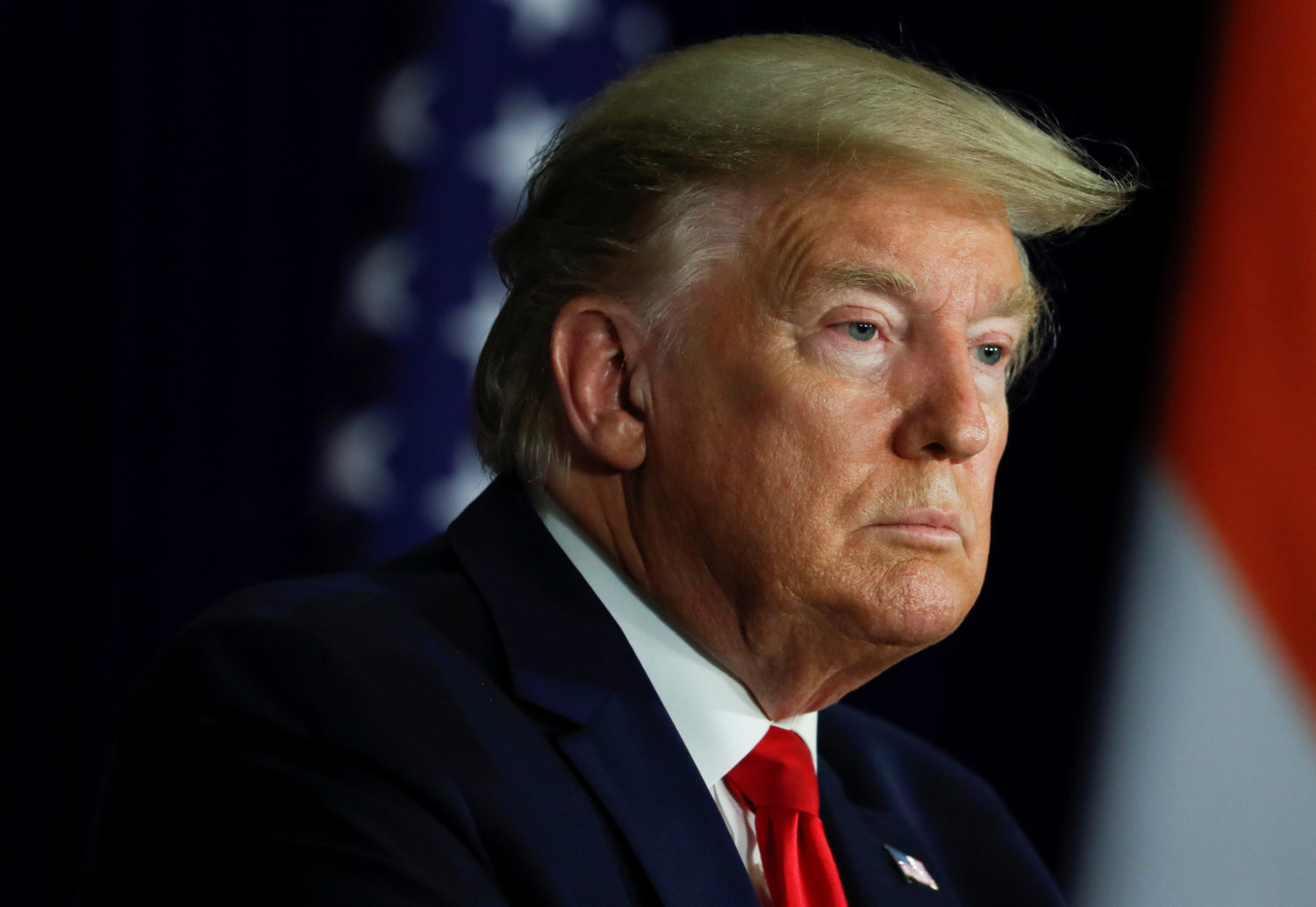
WASHINGTON (Reuters) – The Republican-led U.S. Senate Armed Services Committee voted to require the Department of Defense to rename military bases named after Confederate generals, setting up a clash with President Donald Trump, who opposes that change.

The committee approved the measure, proposed by Democratic Senator Elizabeth Warren, as an amendment to the Senate version of the National Defense Authorization Act, or NDAA, a $740 billion bill setting policy for the Pentagon, announced on Thursday.

The committee adopted the amendment by voice vote. However, the panel’s Republican chairman, Senator Jim Inhofe, expressed concern, telling reporters on a conference call he wanted state input on any decision to change a base name.

The legislation also requires the Pentagon to change within three years the name of streets, aircraft and ships named for Confederate officers or honoring the Confederacy.

Americans have become more conscious about race following the death of African American George Floyd while in Minneapolis police custody. As demonstrations have swept the country, cities have removed Confederate statues and institutions have barred displays of the Confederate flag.

Trump on Wednesday drew a line in favor of keeping the names of 10 bases – including massive Fort Bragg in North Carolina and Fort Benning in Georgia – named for military leaders who battled U.S. forces 160 years ago in the civil war over slavery. He threatened to veto legislation changing them.

Prospects for the amendment making it through the Senate, where Trump’s Republicans have a majority, were not clear. A committee aide said “some sticking points” remained.

Nancy Pelosi, speaker of the Democratic-controlled House, backed the shift. “The American people know these names have to go,” she told a news conference.

The NDAA will not reach Trump until late this year, as it must first pass the Senate and House.

(Reporting by Patricia Zengerle; additional reporting by Richard Cowan; Editing by Chizu Nomiyama and Tom Brown)

White House proposals on police reform being finalized, reduced immunity off table

WASHINGTON (Reuters) – The White House said on Wednesday it was putting the finishing touches on proposals to reform the police following George Floyd’s killing while in police custody, but warned that reducing immunity for officers was a non-starter.

Speaking at a White House briefing, press secretary Kayleigh McEnany said administration plans to address protester concerns about police brutality were reaching “final edits,” adding she hoped the proposals could be made public in the “coming days.”

“The president has spent the last 10 days quietly and diligently working on proposals to address the issues that the protesters raised across the country, legitimate issues,” McEnany said.

But she ruled out presidential support for efforts to reduce police immunity, which she said “would result in police pulling back.”

A Democratic bill unveiled on Monday included limits to those protections to make it easier for individuals to collect damages against officers in lawsuits.

A Reuters investigation published last month revealed how qualified immunity, refined over the years by the U.S. Supreme Court, has made it easier for police officers to kill or injure civilians with impunity.

President Donald Trump has drawn fire for calling on state governors to crack down on the thousands across the country protesting Floyd’s death and threatening to send in the U.S. military even as he described himself as an ally to peaceful protesters.

.

(Reporting by Jeff Mason; Writing by Alexandra Alper; Editing by Leslie Adler and Peter Cooney)

Minneapolis city council pledges to disband police

By Andrea Shalal

WASHINGTON (Reuters) – Minneapolis city council members pledged to abolish the police force whose officer knelt on the neck of a dying George Floyd, as the biggest civil rights protests in more than 50 years demanded a transformation of U.S. criminal justice.

Demonstrations have swept a country slowly emerging from the coronavirus lockdown in the two weeks since Floyd, an unarmed black man, 46, died after choking out the words “I can’t breathe” under the knee of a white police officer.

Trump said on Twitter he ordered the National Guard to start withdrawing from Washington D.C. “now that everything is under perfect control”.

Though there was violence in the early days, the protests have lately been overwhelmingly peaceful. They have deepened a political crisis for President Donald Trump, who repeatedly threatened to order active-duty troops onto the streets.

Huge weekend crowds gathered across the country and in Europe. The high-spirited atmosphere was marred late on Sunday when a man drove a car into a rally in Seattle and then shot and wounded a demonstrator who confronted him.

“I have cops in my family, I do believe in a police presence,” said Nikky Williams, a black Air Force veteran who marched in Washington on Sunday. “But I do think that reform has got to happen.”

The prospect that Minneapolis could abolish its police force altogether would have seemed unthinkable just two weeks ago. Nine members of the 13-person city council pledged on Sunday to do away with the police department in favor of a community-led safety model, though they provided little detail.

“A veto-proof majority of the MPLS City Council just publicly agreed that the Minneapolis Police Department is not reformable and that we’re going to end the current policing system,” Alondra Cano, a member of the Minneapolis council, said on Twitter.

In New York, Mayor Bill de Blasio told reporters he would shift some funds out of the city’s vast police budget and reallocate it to youth and social services. He said he would take enforcement of rules on street vending out of the hands of police, accused of using the regulations to harass minorities.

Curfews were removed in New York and other major cities including Philadelphia and Chicago.


In the nation’s capital, a large and diverse gathering of protesters had packed streets near the White House, chanting “This is what democracy looks like!” and “I can’t breathe.”

A newly-erected fence around the White House was decorated by protesters with signs, including some that read: “Black Lives Matter” and “No Justice, No Peace.”

The “Black Lives Matter” protest slogan was also embraced on Sunday by Trump’s predecessor as Republican candidate for president, Senator Mitt Romney, who marched alongside evangelical Christians in Washington.

Romney told the Washington Post that he wanted to find “a way to end violence and brutality, and to make sure that people understand that black lives matter”.

Former U.S. President Barack Obama also addressed the protests in a YouTube speech for 2020 high school and college graduates. The demonstrations “speak to decades of inaction over unequal treatment and a failure to reform police practices in the broader criminal justice system,” Obama said.

“You don’t have to accept what was considered normal before,” he told the graduates. “You don’t have to accept the world as it is. You can make it the world as it should be.”


(Reporting by Sharon Bernstein in Sacramento, California; Andrea Shalal, Daphne Psaledakis in Washington, and Jonathan Allen and Sinead Carew in New York, and Brad Brooks in Austin, Texas; Writing by Peter Graff, Brad Brooks and Lincoln Feast; Editing by Frank McGurty, Peter Cooney, Raju Gopalakrishnan and Nick Tattersall)

Trump pushes military response as U.S. girds for more protests

By Nathan Layne and Brendan O’Brien

NEW YORK/MINNEAPOLIS (Reuters) – President Donald Trump on Tuesday said U.S. troops should take to the streets of New York City to quell unrest, as authorities across the country prepared for another night of protests over the death of an unarmed black man in police custody.

Dozens of cities are under curfews. The head of the U.S. National Guard said on Tuesday that 18,000 Guard members were assisting local law enforcement in 29 states.

Lawmakers and law enforcement officials seemed taken aback by the extent of mayhem overnight in some major U.S. cities where police were shot at and pelted with rocks and projectiles as they faced hostile crowds.

Demonstrators smashed windows and looted stores in New York, including luxury retailers on Fifth Avenue, and set fire to a Los Angeles strip mall. Four officers were shot in St. Louis and one in Las Vegas who was critically wounded, authorities said.

Trump has threatened to use the military to battle violence that has erupted nightly, often after a day of peaceful protests. He has derided local authorities, including state governors, for their response to the disturbances.

“NYC, CALL UP THE NATIONAL GUARD. The lowlifes and losers are ripping you apart. Act fast!” Trump tweeted on Tuesday. He deploying thousands of armed soldiers and law enforcement in the U.S. capital and vowed to do the same wherever authorities fail to regain control.

New York Governor Andrew Cuomo voiced outrage at the chaos in America’s largest city, saying its mayor and police force “did not do their job last night.” He said he believed Mayor Bill de Blasio underestimated the scope of the problem.

The governor said he had offered the state’s mayors support from state police or 13,000 National Guard who are on standby and said that with a 38,000-strong police force, New York City should be able to address its unrest on its own.

He added that Trump sought to blur the line between protesters representing a cross-section of Americans with a legitimate cause and looters. Authorities blame the looting and vandalism on a relatively small number of people protesting against police brutality.

De Blasio poured cold water on the idea of deploying the National Guard in his city.

Demonstrators have taken to the streets over the death of George Floyd, a 46-year-old African American who died after a white policeman pinned his neck under a knee for nearly nine minutes in Minneapolis on May 25.

Derek Chauvin, the 44-year-old Minneapolis police officer who planted his knee on Floyd’s neck, has been charged with third-degree murder and second-degree manslaughter. Three other officers involved have not been charged.

MARTIN LUTHER KING REMEMBERED

Floyd’s death has reignited the explosive issue of police brutality against African Americans and led to a painful reexamination of race relations five months before a divided America votes in a presidential election.

Some of those who have gathered at the site of Floyd’s killing have invoked the non-violent message of the late U.S. civil rights leader Martin Luther King Jr., assassinated in 1968, as the only way forward.

“He would be truly appalled by the violence because he gave his life for this stuff,” said Al Clark, 62, a black man who drove to the Minneapolis memorial with one of King’s speeches blaring from his truck.

“But I can understand the frustration and anger.”

In Atlanta, six officers will face charges for an incident in which two college students were removed from their car and tased, Fulton County District Attorney Paul Howard told a briefing. Two of the six officers were terminated on Sunday.

A police officer in Sarasota, Florida, was placed on leave on Tuesday after video surfaced showing the officer kneeling on a man’s back and neck during an arrest in May.

Officers were injured in clashes elsewhere, including one who was in critical condition after being hit by a car in the Bronx, police said.

The protests have escalated racial tensions in a country hit hard by the coronavirus pandemic, with African Americans making up a disproportionately high number of cases and being hard hit by job losses from lockdowns to stop the spread of the virus.

Critics accuse Trump, who is seeking re-election in a Nov. 3 election, of further stoking conflict and racial tension rather than seeking to bring the country together and address the underlying issues.

“President Trump is right to be focused on law and order. He wasn’t hired to be the consoler-in-chief,” said Jason Miller, who advised the Republican Trump’s 2016 presidential campaign.

Democratic presidential candidate Joe Biden pledged in a speech on Tuesday to try to heal the racial divide in America and blasted Trump’s response to the protests.

(Reporting by Barbara Goldberg, Lisa Lambert, Maria Caspani, Peter Szekely, Zachary Fagenson, Brendan O’Brien, Nathan Layne, Susan Heavey and Brad Brooks; Writing by Paul Simao; Editing by Howard Goller)

Explainer: Can Trump send the U.S. military to quell violence at protests?

By Jan Wolfe

(Reuters) – U.S. President Donald Trump on Monday suggested he would use federal troops to end unrest that has erupted following the death of George Floyd, an unarmed black man killed in police custody last week.

“If a city or state refuses to take the actions that are necessary to defend the life and property of their residents, then I will deploy the United States military and quickly solve the problem for them,” Trump said during brief remarks at the White House.

The demonstrations have been largely peaceful, but police in some cities have used force against journalists and protesters, and protesters have clashed with police. Many U.S. cities have set curfews.

To deploy the armed forces, Trump would need to formally invoke a group of statutes known as the Insurrection Act.

WHAT IS THE INSURRECTION ACT?

Under the U.S. Constitution, governors generally have the authority to maintain order within state borders. This principle is reflected in a law called the Posse Comitatus Act, which generally prohibits the federal military from participating in domestic law enforcement.

The Insurrection Act, which dates to the early 1800s, is an as exception to principles later codified in the Posse Comitatus Act.

The Insurrection Act permits the president to send in U.S. forces to suppress a domestic insurrection that has hindered the normal enforcement of U.S. law.

CAN TRUMP SEND IN TROOPS WITHOUT A GOVERNOR’S APPROVAL?

Yes. The law lays out a scenario in which the president is required to have approval from a state’s governor or legislature, and also instances where such approval is not necessary, said Robert Chesney, a professor of national security law at the University of Texas.

Historically, in instances where the Insurrection Act was invoked, presidents and governors have usually agreed on the need for troops, said Thaddeus Hoffmeister, a law professor at the University of Dayton.

In 2005, former President George W. Bush decided not to invoke the Insurrection Act to send active-duty troops to Louisiana in the aftermath of Hurricane Katrina in part because the state’s then-governor opposed the move.

HAS IT BEEN INVOKED BEFORE?

Yes. The Insurrection Act has been invoked on dozens of occasions through U.S. history. Since the civil rights movement of the 1960s, however, its use has become “exceedingly rare,” according to a report by the Congressional Research Service.

The Insurrection Act was last used in 1992, when the acquittal of four Los Angeles police officers in the beating of black motorist Rodney King led to deadly riots.

CAN A COURT STRIKE DOWN TRUMP’S APPLICATION OF THE LAW?

Hoffmeister said he did not think invoking the Insurrection Act was warranted because governors can handle the current unrest through their criminal justice systems.

“The Insurrection Act should only be used in dire situations and I don’t think the circumstances right now call for it,” Hoffmeister said.

But Chesney said a successful legal challenge to Trump’s use of the law was “very unlikely.” Courts have historically been very reluctant to second-guess a president’s military declarations, he said.

“The law, for all practical purposes, leaves this to the president with very little judicial review with any teeth,” Chesney said. “That may be a terrible state of affairs, but that’s what it is.”

(Reporting by Jan Wolfe; Edited by Noeleen Walder, Gerry Doyle and Steve Orlofsky)

Kremlin says Putin ‘supports dialogue’ after Trump’s proposed G7 invite

MOSCOW (Reuters) – The Kremlin said on Monday it needed more details before responding to U.S. President Donald Trump’s proposal to invite Russia to attend a Group of Seven nations summit, but that President Vladimir Putin supported dialogue on the issue.

Trump said on Saturday he would postpone a G7 summit he had hoped to hold next month until September or later and expand the list of invitees to include Australia, Russia, South Korea and India.

“President Putin is a supporter of dialogue in all directions, but in this case, in order to respond to such initiatives, we need to receive more information, which we unfortunately do not have,” said Kremlin spokesman Dmitry Peskov.

“We don’t know the details of this proposal yet, we don’t know if it is official,” he said, adding that Moscow needed to know what might be on the agenda of the proposed meeting and its format, before responding.

Russia was expelled from what was then the G8 in 2014 when Trump’s predecessor, Barack Obama, was U.S. president, after Moscow annexed the Crimea region from Ukraine. Russia still holds the territory, and various G7 governments have rebuffed previous calls from Trump to readmit Moscow.

Peskov said other formats such as the G20 gave Russia a platform to discuss international issues with other countries.

“There are very comfortable and effective mechanisms for all participants for international dialogue, such as the G20, which allows the world’s leading economies to discuss the most pressing problems,” he said.

Some Russian analysts believe Moscow should regard Trump’s potential invitation with skepticism.

“Trump’s intention to invite Putin as a guest of the #G7 makes no sense for Russia. All blame, no gain is what it’ll get. This chapter should remain closed,” Dmitri Trenin, director of the Carnegie Moscow Center and a former colonel in the Russian army, wrote on Twitter on Sunday.

(Reporting by Alexander Marrow, Maxim Rodionov and Andrey Kuzmin; Editing by Andrew Osborn)

North Korea accuses U.S. of hurting its image with cyber threat warning

SEOUL (Reuters) – North Korea accused the United States of smear tactics on Friday after Washington renewed accusations last month that Pyongyang was responsible for malicious cyber attacks.

It was the latest in a series of exchanges underscoring the friction between the two countries after denuclearization talks launched by U.S. President Donald Trump and North Korean leader Kim Jong Un stalled late last year.

“We want to make it clear that our country has nothing to do with the so-called ‘cyber threat’ that the U.S. is talking about,” North Korea’s Foreign Ministry said in the statement.

It said Washington was trying to use the allegations as leverage, along with the issues of nuclear missiles and human rights as well as accusations of terrorism funding and money laundering. The aim was to “smear our country’s image and create a way to shake us up”, it said.

The U.S. State Department, Treasury, and Department of Homeland Security Issues, along with the FBI, issued a new warning last month about the threat of North Korean hackers, calling particular attention to financial services.

North Korea is alleged to be behind an ambitious, years-long campaign of digital theft, including siphoning cash from ATMs, stealing from major banks, extorting computer users worldwide, and hijacking digital currency exchanges.

Since 2006, the country has been subject to U.N. sanctions that have been strengthened by the Security Council over the years in a bid to cut off funding for Pyongyang’s nuclear and ballistic missile programs.

This week, the U.S. Justice Department accused the country’s state-owned bank of evading U.S. sanctions laws and said it had charged 28 North Korean and five Chinese citizens in its latest crackdown on alleged sanctions violations.

(Reporting by Joyce Lee; editing by Philippa Fletcher)

Kudlow says Trump administration looking at ‘back to work bonus’

WASHINGTON (Reuters) – White House economic adviser Larry Kudlow said on Tuesday that President Donald Trump’s administration is looking carefully at a potential “back to work bonus” to encourage Americans who had been laid off as the coronavirus pandemic spread to return to work.

Kudlow, speaking on Fox News Channel, also said he does not think Congress will approve another $600 per week in extra jobless benefits to laid-off workers in a future coronavirus relief legislation.

(Reporting by Tim Ahmann, Lisa Lambert and Daphne Psaledakis)

Trump warns governors: let places of worship open this weekend

By Jeff Mason

WASHINGTON (Reuters) – U.S. President Donald Trump on Friday urged state governors to allow the reopening this weekend in the United States of places of worship which have been closed due to the coronavirus, warning that he will override governors who do not do so.

At a short appearance in the White House briefing room, Trump said he was declaring that places of worship – churches, synagogues and mosques – are providing essential services and thus should be opened as soon as possible.

Places of worship have been closed along as part of stay-at-home orders most states have tried to control the spread of the coronavirus. With the infection rate declining in many areas, there is pressure to begin reopening.

Trump issued a warning to governors who refuse his appeal but did not say under what authority he would act to force the reopening of religious facilities.

“If they don’t do it I will override the governors. In America we need more prayer, not less,” he said.

(Reporting Jeff Mason and Steve Holland, Editing by Franklin Paul and David Gregorio)

‘There is a real risk’ of new outbreak if U.S. states reopen too soon: Fauci

By Makini Brice and Richard Cowan

WASHINGTON (Reuters) – Leading U.S. infectious disease expert Anthony Fauci on Tuesday warned Congress that a premature lifting of lockdowns could lead to additional outbreaks of the deadly coronavirus, which has killed 80,000 Americans and brought the economy to its knees.

Fauci, director of the National Institute of Allergy and Infectious Diseases, told a U.S. Senate panel that states should follow health experts’ recommendations to wait for signs including a declining number of new infections before reopening.

President Donald Trump has been encouraging states to end a weeks-long shuttering of major components of their economies. But senators heard a sobering assessment from Fauci, when asked by Democrats about a premature opening of the economy.

“There is a real risk that you will trigger an outbreak that you may not be able to control and, in fact paradoxically, will set you back, not only leading to some suffering and death that could be avoided but could even set you back on the road to try to get economic recovery,” Fauci said.

The COVID-19 respiratory disease caused by the new coronavirus has infected more than 1.3 million Americans and killed more than 80,600.

Fauci, a member of Trump’s coronavirus task force, told the Senate Health, Education, Labor and Pensions Committee that the nation’s efforts to battle the deadly virus and the COVID-19 disease it triggers should be “focused on the proven public health practices of containment and mitigation.”

Fauci, 79, testified remotely in a room lined with books as he self-quarantines after he may have come into contact with either of two members of the White House staff who were diagnosed with COVID-19. He noted that he may go to the White House if needed.

“All roads back to work and back to school run through testing and that what our country has done so far on testing is impressive, but not nearly enough,” Lamar Alexander, the Republican chairman of the Senate committee, said in an opening statement to Tuesday’s hearing.

Alexander is also self-quarantining in his home state of Tennessee for 14 days after a member of his staff tested positive. Alexander chaired the hearing virtually.

Democrats on the health committee largely concentrated on the risks of opening the U.S. economy too soon, while Republicans downplayed that notion, saying a prolonged shutdown could have serious negative impacts on people’s health and the health of the economy.

Trump, who previously made the strength of the economy central to his pitch for his November re-election, has encouraged states to reopen businesses that had been deemed non-essential amid the pandemic.

His administration has largely left it to states to decide whether and how to reopen. State governors are taking varying approaches, with a growing number relaxing tough restrictions enacted to slow the outbreak, even as opinion polls show most Americans are concerned about reopening too soon.

Senator Patty Murray, the senior committee Democrat, criticizing aspects of the administration’s response to the pandemic, said Americans “need leadership, they need a plan, they need honesty and they need it now, before we reopen.”

Others testifying on Tuesday included U.S. Centers for Disease Control and Prevention Director Robert Redfield, Assistant Secretary for Health Brett Giroir and Food and Drug Administration Commissioner Stephen Hahn. Each testified remotely.

Meanwhile, House Majority Leader Steny Hoyer, a Democrat, told reporters that a Democratic bill to provide significant new federal aid in response to the coronavirus pandemic could be unveiled later on Tuesday, with a possible House of Representatives votes on it on Friday.

(GRAPHIC: Tracking the novel coronavirus in the U.S. – https://graphics.reuters.com/HEALTH-CORONAVIRUS-USA/0100B5K8423/index.html)

(Reporting by Richard Cowan, Makini Brice, Doina Chiacu and Tim Ahmann; Editing by Scott Malone and Alistair Bell)