Explainer: How U.S. shutdown over border wall fight might play out

Jocelyn Lofstrom, whose husband is a federal worker, prepares a sign prior to a protest of the partial U.S government shutdown on day 33 of of the shutdown in the Hart Senate office building in Washington, U.S., January 23, 2019. REUTERS/Leah Millis

By Richard Cowan

WASHINGTON (Reuters) – On the 34th day of a partial U.S. government shutdown, President Donald Trump and congressional Democrats remain at odds over his demand for funding for a wall on the border with Mexico.

Trump has refused to sign any legislation to fund an array of government agencies, including the departments of agriculture, commerce, justice, interior and homeland security, unless it includes $5.7 billion for his long-promised wall.

The Democrats, who control the House of Representatives, have rejected the wall as ineffective and immoral and want the government to be reopened before any further talks about border security.

As long as the stalemate continues, 800,000 federal employees are on furlough or working without pay.

The following are some possible ways the standoff might end:

GLIMMERS OF COMPROMISE

The Senate is due to vote on two measures on Thursday: Trump’s proposal to fund government agencies through Sept. 30 while paying for a wall and also providing some temporary protections for some undocumented immigrants (“Dreamers”), and a Democratic plan to reopen the government through Feb. 8 while border security negotiations continue.

Both measures are expected to be defeated. If they are, that could clear the way for a new round of negotiations between Congress and Trump.

The fact that Senate Majority Leader Mitch McConnell is willing to allow the votes suggests he may be trying to persuade lawmakers of both parties to compromise. The speaker of the House, Democrat Nancy Pelosi, told reporters on Thursday that she was willing to meet face-to-face with Trump.

POSSIBLE WAYS TO BREAK THE IMPASSE

* Congress and Trump find a way to temporarily re-open the government under a promise of serious border security negotiations over the next month or so.

* Democrats agree to more than the $1.3 billion in border security funding they have been backing, but less than the $5.7 billion Trump wants. If Trump faces a public opinion backlash or there are signs Republican lawmakers may be abandoning him, he might have to settle for less.

* Democrats and Republicans agree on $5.7 billion in border security funding this year, but the language allows both sides to claim victory by including different ways of securing the border. Democrats insist the money will not be used to build a wall; Trump and his fellow Republicans tout the money that will include funding for various types of barriers and other tools to discourage illegal immigration and drugs.

* A “grand bargain” emerges that reopens the government, bolsters border security and also provides protections from deportation for “Dreamers,” who were brought to the United States illegally by their parents. Other changes to immigration law also could be included. Such a deal would fund federal programs through Sept. 30, the end of the fiscal year, add funds for an array of border security tools without imposing tough new constraints on immigration that Trump has previously attempted.

TRUMP DECLARES ‘NATIONAL EMERGENCY’

While the possibility that this might happen has faded recently, Trump could revive his threat to declare a national emergency at any time. His rationale would be that illegal immigration jeopardizes U.S. security and he is empowered to act by redirecting existing federal funds to build the wall. Defense Department accounts could be targeted for use on the border.

Under the Constitution, Congress holds the power to make decisions about spending U.S. taxpayers’ money and using presidential powers to move funding around is almost certain to face legal challenges.

Taking this step would probably lead to prompt enactment of legislation reopening the government under the belief that Trump would sign it into law, without the $5.7 billion.

(Reporting by Richard Cowan; Editing by Tomasz Janowski and Sonya Hepinstall)

Trump delays State of the Union Address until shutdown ends

Kera Myers, the wife of a member of the U.S. Coast Guard working without pay during the government shutdown, picks up produce, eggs, milk, bread and other supplies being distributed by Gather food pantry at the U.S. Coast Guard Portsmouth Harbor base in New Castle, New Hampshire, U.S., January 23, 2019. REUTERS/Brian Snyder

By Richard Cowan and John Whitesides

WASHINGTON (Reuters) – U.S. President Donald Trump said in a late night Tweet on Wednesday that he would delay a State of the Union address until the government shutdown was over, responding to House Speaker Nancy Pelosi’s move to obstruct his plans for the speech.

Earlier in the day, Democratic leaders in the House of Representatives floated the idea of ending the partial government shutdown by giving Trump most or all of the money he seeks for security along the Mexican border but for items other than the wall he wants.

As a shutdown that has left 800,000 federal workers without pay hit its 33rd day, Pelosi effectively disinvited Trump from delivering the annual State of the Union address in the House chamber until the government is fully opened.

The Republican president responded to the Democrat speaker with a tweet.

“This is her prerogative – I will do the Address when the Shutdown is over. I am not looking for an alternative venue for the SOTU Address because there is no venue that can compete with the history, tradition and importance of the House Chamber,” the president said in the tweet.

“I look forward to giving a great State of the Union Address in the near future!”

Other leaders in the Democratic-controlled House said they were drafting a funding offer they will likely make to Trump in a letter.

Representative James Clyburn, the No. 3 House Democrat, said Democrats could fulfill Trump’s request for $5.7 billion for border security with technological tools such as drones, X-rays and sensors, as well as more border patrol agents.

Representative Steny Hoyer, the No. 2 House Democrat, said Democrats also would discuss “substantial sums of additional money” for border security as part of a possible deal. He did not say if it would amount to the $5.7 billion sought by Trump.

The president triggered the shutdown last month by demanding money for the wall, opposed by Democrats, as part of any legislation to fund about a quarter of the government. Clyburn’s offer would be a significant monetary increase over bills previously passed by Democrats, which included only about $1.3 billion for this year in additional border security, with none for a wall.

“Using the figure the president put on the table, if his $5.7 billion is about border security then we see ourselves fulfilling that request, only doing it with what I like to call using a smart wall,” Clyburn told reporters.

Republican Representative Tom Cole, a member of the House Appropriations Committee, told reporters the Democratic proposal could help.

“Any movement, any discussion is helpful,” Cole said. “We’ve got to get past this wall-or-no-wall debate.”

The battle over border security and government funding spilled over into a parallel dispute over the president’s State of the Union address. Trump sent a letter to Pelosi on Wednesday saying he looked forward to delivering it as scheduled next Tuesday in the House chamber. Pelosi previously had asked Trump to consider postponing it because security could not be guaranteed during the shutdown.

But Pelosi told Trump on Wednesday the House would not consider a measure authorizing his address until the shutdown ends. “Again, I look forward to welcoming you to the House on a mutually agreeable date for this address when government has been opened,” Pelosi said to Trump in a letter.

In a sign Trump may be bracing for a long shutdown, a senior administration official said agencies without funding had been asked to give the White House a list of programs that could be hurt “within the coming weeks” if the funding lapse continues.

SENATE PLANS VOTES

The U.S. Senate, controlled by Trump’s fellow Republicans, planned votes for Thursday on competing proposals that face steep odds to end the shutdown.

Senate Majority Leader Mitch McConnell plans a vote on a Democratic proposal that would fund the government for three weeks but does not include the $5.7 billion in partial funding for a wall on the U.S.-Mexico border.

Its prospects appeared grim. The House has passed several similar bills but Trump has rejected legislation that does not include the wall funding. McConnell previously said he would not consider a bill that Trump did not support.

McConnell also planned to hold a vote on legislation that would include wall funding and a temporary extension of protections for “Dreamers,” people brought illegally to the United States as children, an offer Trump made on Saturday. Trump’s 2017 plan to rescind protections against deportation for hundreds of thousands of “Dreamers” has been blocked by the courts.

Democrats have dismissed the offer, saying they would not negotiate on border security before reopening the government, and that they would not trade a temporary extension of the immigrants’ protections in return for a permanent border wall they have called ineffective, costly and immoral.

Barclays economists said on Wednesday they reduced their outlook on U.S. economic growth in the first quarter to an annualized rate of 2.5 percent from an earlier projection of 3 percent as a result of the shutdown.

Furloughed federal workers are struggling to make ends meet during the longest government shutdown in U.S. history. Many have turned to unemployment assistance, food banks and other support, or have sought new jobs.

(Reporting by Richard Cowan and John Whitesides; Additional reporting by Yasmeen Abutaleb, Roberta Rampton, Eric Beech, Susan Heavey, Doina Chiacu and Rich McKay; Writing by John Whitesides; Editing by Will Dunham, Peter Cooney & Simon Cameron-Moore)

Daring Pelosi, Trump says he ‘looks forward’ to addressing Congress

FILE PHOTO: U.S. President Donald Trump delivers remarks on border security and the partial shutdown of the U.S. government from the Diplomatic Room at the White House in Washington, U.S., Jan. 19, 2019. REUTERS/Yuri Gripas/File Photo

WASHINGTON (Reuters) – President Donald Trump said on Wednesday he looks forward to delivering a State of the Union address before the U.S. Congress as scheduled on Jan. 29 in the chamber of the House of Representatives despite House Speaker Nancy Pelosi’s request that he delay it due to the government shutdown.

“It would be so very sad for our Country if the State of the Union were not delivered on time, on schedule, and very importantly, on location!” Trump wrote, according to a copy of the letter to Pelosi released by the White House.

Speaker of the House Nancy Pelosi (D-CA) speaks during a press briefing on the 27th day of a partial government shutdown on Capitol Hill in Washington, U.S., January 17, 2019. REUTERS/Joshua Roberts

Speaker of the House Nancy Pelosi (D-CA) speaks during a press briefing on the 27th day of a partial government shutdown on Capitol Hill in Washington, U.S., January 17, 2019. REUTERS/Joshua Roberts

Pelosi on Jan. 16 asked Trump to consider postponing the address, which is traditionally delivered in the House chamber, because part of the U.S. government is shut down. She had cited concerns about security for the event with some personnel furloughed during a month-long shutdown.

Trump, replying to Pelosi Wednesday, brushed aside the security concerns.

He said the Department of Homeland Security and the U.S. Secret Service had told him there would be “absolutely no problem” with the security for the speech, which is traditionally attended by both houses of Congress, most of the president’s Cabinet, the Joint Chiefs of Staff and justices of the Supreme Court.

office.

“Therefore, I will be honoring your invitation, and fulfilling my Constitutional duty, to deliver important information to the people and Congress of the United States of America regarding the State of our Union,” Trump wrote to Pelosi. “I look forward to seeing you on the evening of January 29th in the Chamber of the House of Representatives.”

There was no immediate reaction to the letter from Pelosi’s office.

Democratic U.S. Representative Jimmy Panetta, asked about Trump’s letter, told MSNBC: “This is just dialing up the rhetoric.”

Panetta said the final decision was up to Pelosi, saying “at this point, I don’t think it’s going to happen if we’re still shut down.”

(Reporting by Susan Heavey and Susan Cornwell; Editing by Kevin Drawbaugh and Jeffrey Benkoe)

Trump says no amnesty for ‘Dreamers,’ signals support in broader deal

U.S. President Donald Trump arrives to deliver remarks on border security and the partial shutdown of the U.S. government in the Diplomatic Room at the White House in Washington, U.S., January 19, 2019. REUTERS/Yuri Gripas

By David Morgan

WASHINGTON (Reuters) – President Donald Trump said on Sunday his proposed immigration deal to end a 30-day partial government shutdown would not lead to amnesty for “Dreamers,” but he appeared to signal support for amnesty as part of a broader immigration agreement.

In a morning Twitter storm, Trump also said he would not seek the removal of millions of illegal immigrants living in the United States, while bashing House of Representatives Speaker Nancy Pelosi and her fellow Democrats for turning down an offer he made on Saturday, including for Dreamers, the immigrants brought to the United States illegally as children.

“No, Amnesty is not a part of my offer. It is a 3-year extension of DACA. Amnesty will be used only on a much bigger deal, whether on immigration or something else,” Trump said on Twitter.

“Likewise there will be no big push to remove the 11,000,000 plus people who are here illegally-but be careful Nancy!”

The Dreamers are protected from deportation under the Deferred Action for Childhood Arrivals (DACA) program.

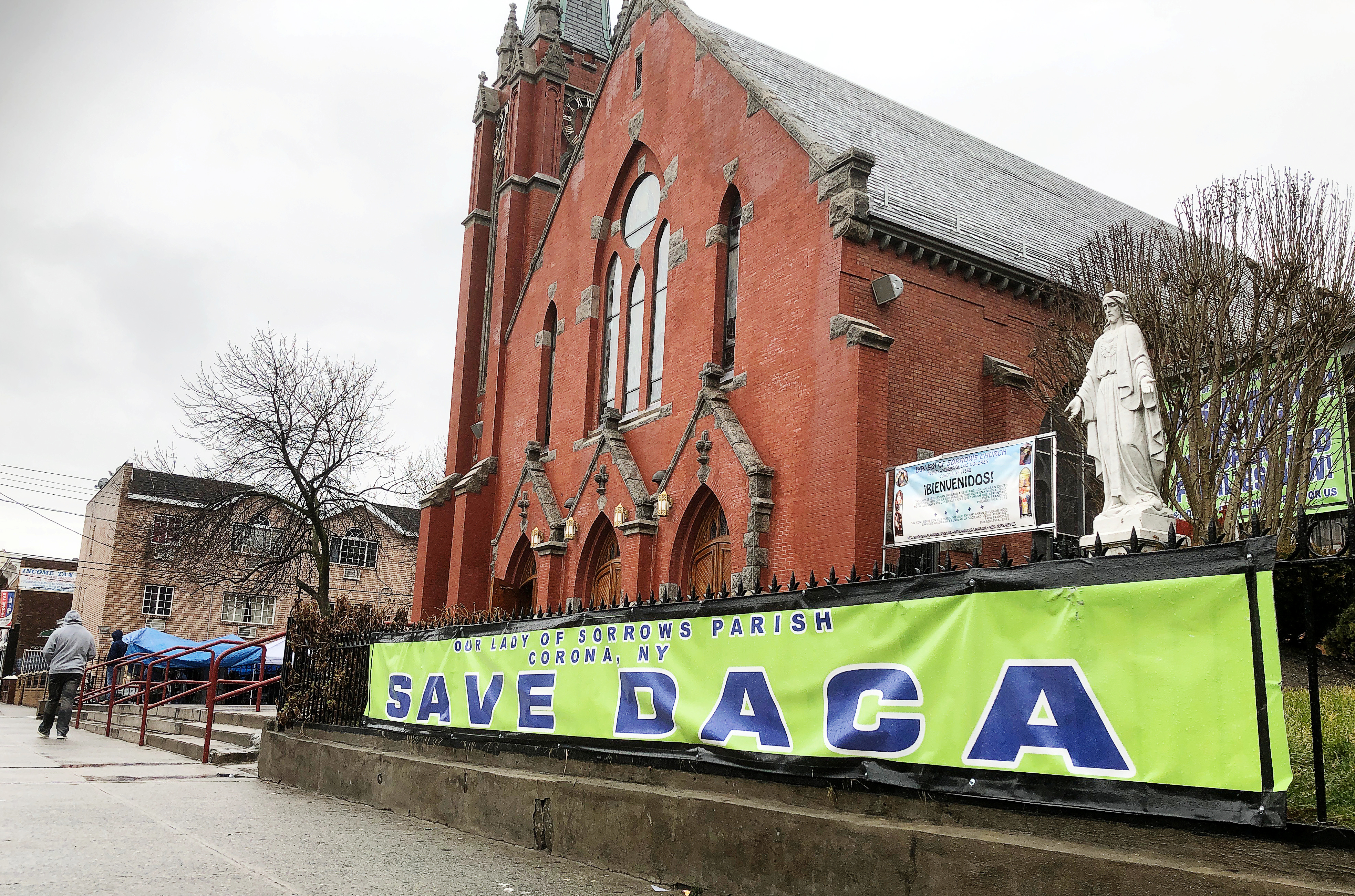
Banners outside a Catholic church in New York's Queens borough express support for "Dreamer" immigrants in New York, U.S. January 20, 2019. REUTERS/Nick Zieminski

Banners outside a Catholic church in New York’s Queens borough express support for “Dreamer” immigrants in New York, U.S. January 20, 2019. REUTERS/Nick Zieminski

DACA was put in place under former President Barack Obama. The Trump administration said in September 2017 it would rescind DACA, but it remains in effect under court order.

Trump did not make clear what he was referring to regarding the 11 million people mentioned in his tweet. About 12 million people are living in the United States illegally, according to U.S. Department of Homeland Security estimates.

In a Saturday speech from the White House, Trump offered three years of protections for Dreamers and for holders of temporary protected status (TPS), another class of immigrants from designated countries affected by armed conflict, natural disaster or other strife.

Republican Senate Majority Leader Mitch McConnell welcomed the plan as a “bold solution,” while a spokesman said McConnell would seek Senate passage of the proposal this week.

The legislation will include bills to fund government departments that have been closed during the shutdown, as well as some disaster aid and the president’s immigration proposal, a McConnell aide said. The plan will contain $12.7 billion in disaster aid, said another Senate source who asked not to be named.

But Trump’s amnesty tweet caught some Republicans off guard.

“I don’t know what the president’s calling amnesty,” Senator James Lankford, an Oklahoma Republican, told ABC’s “This Week” program. “That’s a longer debate and obviously not something we can solve quickly.”

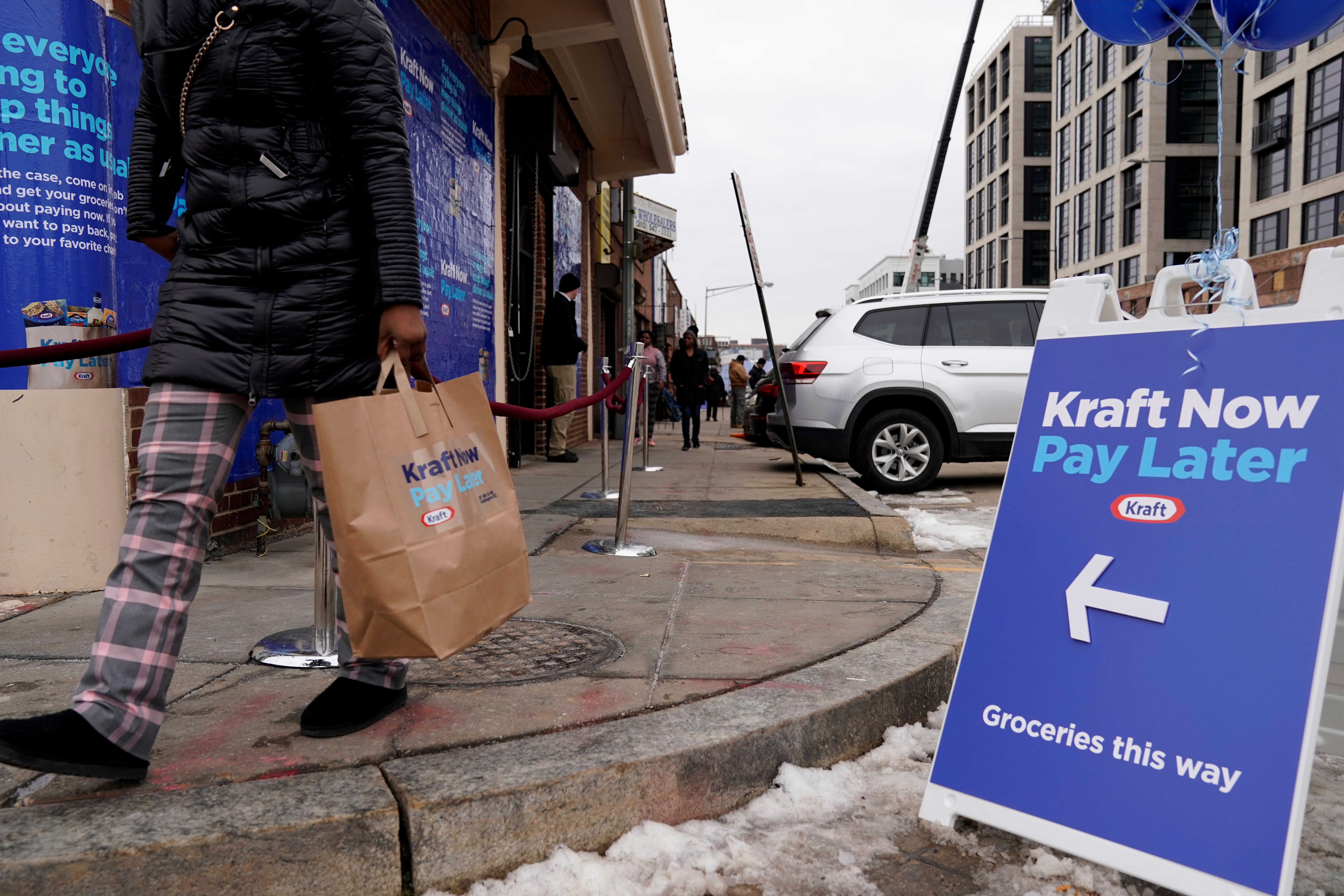
FILE PHOTO: A federal worker left unpaid or furloughed carries a free bag of groceries from Kraft Foods on the 27th day of the partial government shutdown in Washington, U.S., January 17, 2019. REUTERS/Joshua Roberts

FILE PHOTO: A federal worker left unpaid or furloughed carries a free bag of groceries from Kraft Foods on the 27th day of the partial government shutdown in Washington, U.S., January 17, 2019. REUTERS/Joshua Roberts

Trump appeared to be responding to conservative critics who accused him of proposing amnesty and reneging on a campaign promise, which could alienate his right-wing base.

About one-quarter of the U.S. government shut down on Dec. 22 over Trump’s demand for $5.7 billion to fund a wall along the border with Mexico, which Democrats have refused to consider. Some 800,000 federal workers have been ordered to stay home or work without pay during the shutdown.

The promise of a border wall was a mainstay of Trump’s 2016 presidential election campaign. As a candidate, he said Mexico would pay for the barrier, but the Mexican government has refused.

The shutdown has caused widespread disruptions.

The Transportation Security Administration on Sunday reported an 8 percent national rate of unscheduled absences on Saturday, compared with 3 percent a year ago. More than 50,000 TSA officers are working without pay.

Some airports experienced longer wait times at security checkpoints, and Baltimore/Washington International Thurgood Marshall Airport closed one of its checkpoints because of excessive absences.

‘STARTING POINT’

On Sunday, a day after Trump’s DACA proposal, there appeared to be signs of movement, even as Democrats insisted the government should reopen before proceeding with talks over border security.

“What the president proposed yesterday – increasing border security, looking at TPS, looking at the Dreamers – I’ll use that as a starting point. But you’ve got to start by reopening the government,” U.S. Senator Mark Warner said on NBC’s “Meet the Press.”

Warner, a Virginia Democrat, also said Congress should approve pay for federal workers affected by the shutdown before they miss another paycheck this week.

Bennie Thompson, the Democratic chair of the House Homeland Security Committee, said Democrats were not opposed to physical barriers on the southern border but that Trump’s changing position posed a problem for resolving the border security issue.

“I would not rule out a wall in certain instances,” Thompson said on ABC’s “This Week” on Sunday.

(Reporting by David Morgan in Washington; Additional reporting by Yasmeen Abutaleb and Susan Cornwell in Washington; Editing by Susan Thomas and Peter Cooney)

Trump sends support to anti-abortion activists at March for Life

U.S. President Donald Trump, speaking from the nearby White House, addresses attendees of the March for Life rally by satellite in Washington, U.S. January 19, 2018. REUTERS/Eric Thayer

By Katharine Jackson

WASHINGTON (Reuters) – U.S. President Donald Trump spoke in a pre-recorded video to thousands of anti-abortion activists in Washington on Friday for the 46th March for Life, vowing to veto any legislation that “weakens the protection of human life.”

The event is the largest annual gathering in the United States of opponents of the Supreme Court’s 1973 ruling in Roe v. Wade. That ruling found that certain state laws outlawing abortion were an unconstitutional violation of a woman’s right to privacy, effectively legalizing abortion nationwide.

“As president, I will always defend the first right in our Declaration of Independence, the right to life,” Trump said in remarks recorded in the Oval Office, a right he said extended to “unborn children.”

Vice President Mike Pence appeared onstage at the rally to introduce the video, calling Trump, who before entering politics said he supported abortion access, “the most pro-life president in American history.”

During his 2016 campaign, Trump vowed to appoint Supreme Court justices he believed would overturn Roe. He has since appointed two justices to the court, Neil Gorsuch and Brett Kavanaugh, cementing the court’s 6-3 conservative-leaning majority.

Since the heated Senate confirmation hearings for Kavanaugh, the court has steered clear of some cases on volatile social issues involving abortion.

Marchers held signs saying “Pray to End Abortion” and calling for the defunding Planned Parenthood, a national healthcare provider that provides abortions. “My unexpected pregnancy is now 30!” read another sign.

One marcher said she had an abortion when she was 15 but had been opposed to abortion ever since the birth of her first daughter.

“Every child is human even in utero and they deserve the right to life,” Sheila, a 56-year-old Maryland resident, said in an interview, declining to give her last name because of the political divisiveness of the subject.

Speakers at this year’s rally include Congressman Dan Lipinski, a Democrat, and Congressman Chris Smith, a Republican.

Supporters of abortion access say bans infringe on women’s rights and health, and lead to greater rates of injury and death among pregnant women.

About half of U.S. adults say abortion should be legal, according to a Reuters/Ipsos poll last year, with about 68 percent of Democrats supporting abortion access compared to about 31 percent of Republicans.

(Additional reporting and writing by Jonathan Allen; Editing by Scott Malone, Bill Berkrot and Tom Brown)

Top North Korea envoy meets Pompeo, headed for talks with Trump

U.S. Secretary of State Mike Pompeo escorts Vice Chairman of the North Korean Workers' Party Committee Kim Yong Chol, North Korea's lead negotiator in nuclear diplomacy with the United States, into talks aimed at clearing the way for a second U.S.-North Korea summit as they meet at a hotel in Washington, U.S., January 18, 2019. REUTERS/Joshua Roberts

By David Brunnstrom and Matt Spetalnick

WASHINGTON (Reuters) – A North Korean nuclear envoy held talks with Secretary of State Mike Pompeo on Friday and was then due to meet President Donald Trump at the White House, a diplomatic flurry aimed at laying the groundwork for a second U.S.-North Korea summit.

The visit of Kim Yong Chol, Pyongyan’s lead negotiator with the United States, marked a rare sign of potential movement in a denuclearization effort that has stalled since a landmark meeting between Trump and North Korean leader Kim Jong Un in Singapore last year.

Kim Yong Chol and Pompeo, with tight smiles, posed together for photographs at a Washington hotel before holding about 45 minutes of talks that could determine whether the two sides can make headway. There has been no indication of any narrowing of differences over U.S. demands that North Korea abandon a nuclear weapons program that threatens the United States or over Pyongyang’s demand for a lifting of punishing sanctions.

Hours before Kim Yong Chol’s arrival on Thursday, Trump – who declared after the Singapore summit in June that the nuclear threat posed by North Korea was over – unveiled a revamped U.S. missile defense strategy that singled out the country as an ongoing and “extraordinary threat.”

The State Department said after the meeting that Pompeo had a “good discussion” with Kim Yong Chol “on efforts to make progress on commitments President Trump and Chairman Kim Jong Un made at their summit in Singapore.” But it provided no specifics.

After the talks with Pompeo, Kim Yong Chol, a hardline former spy chief, the White House confirmed that he would hold a meeting with the president in the Oval Office later on Friday.

The high-level visit could yield an announcement of plans for a second summit. Both Trump and Kim have expressed an interest in arranging but some U.S.-based analysts say it would be premature due to the lack of obvious progress so far.

Their first meeting produced a vague commitment by Kim to work toward the denuclearization of the Korean peninsula, but he has yet to take what Washington sees as concrete steps in that direction.

(Reporting By Matt Spetalnick; Editing by Jeffrey Benkoe and Alistair Bell)

Trump to meet lawmakers at White House as shutdown enters 25th day

FILE PHOTO: U.S. President Donald Trump speaks during a "roundtable discussion on border security and safe communities" with state, local, and community leaders in the Cabinet Room of the White House in Washington, U.S., January 11, 2019. REUTERS/Leah Millis

WASHINGTON (Reuters) – President Donald Trump will meet members of Congress at the White House on Tuesday as the partial U.S. government shutdown enters a 25th day without resolution amid a standoff over border wall funding.

Trump is scheduled to host the lawmakers for lunch, according to his public schedule, which did not say who was attending. Moderate House Democrats were invited, CNN and Politico reported.

Representatives for the White House and congressional leaders did not immediately respond to a request for comment.

Neither Trump nor Democratic leaders in Congress have shown signs of bending on wall funding but the Washington Post on Monday reported a new bipartisan group of U.S. senators is searching for an agreement that could help end the partial shutdown.

Trump, who has demanded $5.7 billion from Congress to build his long-promised wall along the U.S.-Mexican border, on Monday rejected a call by fellow Republicans to temporarily reopen the government while talks continue on border security issues.

He campaigned in 2016 on a promise of building a wall to stop illegal immigration and drug trafficking and more recently raised the possibility of declaring a national emergency to go around Congress to secure funding for the wall. In recent days, however, he has said that he would prefer Congress to act.

Democrats, who took over the U.S. House of Representatives this month, have rejected the border wall but back other border security measures.

House Democrats have passed a number of bills to fund the roughly one-quarter of federal operations that have been closed, but Senate Majority Leader Mitch McConnell, a Republican, has said the chamber will not consider legislation that Trump will not sign into law.

Senate Democratic Leader Chuck Schumer on Monday called on McConnell to move forward, suggesting that Congress go around the president.

The partial shutdown is the longest in U.S. history and its effects have begun to reverberate across the country.

Longer lines have formed at some airports as more security screeners fail to show up for work while food and drug inspections have been curtailed and farmers, stung by recent trade spats, have been unable to receive federal aid.

The shutdown began on Dec. 22 and its impact is worrying some on Wall Street. Roughly 800,000 federal employees are feeling the financial sting after missing their first paycheck last week, a loss of income expected to have ripple effects.

Speaking on CNBC, Delta Air Lines Inc Chief Executive Officer Ed Bastian said the partial shutdown will cost the airline $25 million in lost revenue in January because fewer government contractors are traveling.

Other U.S. airlines also are not able to open new routes or use new airplanes because they need certification from federal officials who are furloughed.

A number of companies, already concerned about a global economic uncertainty, also have urged Republicans and Democrats to end the stalemate in Washington.

(Reporting by Susan Heavey; Editing by Steve Orlofsky and Bill Trott)

As U.S. shutdown ties record, Trump weighs emergency declaration

President Donald Trump salutes a U.S. Border Patrol helicopter as he stands with U.S. Border Patrol agents as it flies over the Rio Grande River during his visit to the U.S. - Mexico border in Mission, Texas, U.S., January 10, 2019. REUTERS/Leah Millis

By Richard Cowan

WASHINGTON (Reuters) – President Donald Trump, facing the prospect of the longest U.S. government shutdown in history, is considering declaring a national emergency that would likely escalate a policy dispute with Democrats over his proposed U.S.-Mexico border wall into a court test of presidential power.

To escape a political trap of his own making, Trump on Thursday suggested that he might declare an emergency so he can bypass Congress to get funding for his wall, which was a central promise of his 2016 election campaign.

As the partial government shutdown entered its 21st day on Friday, Trump reiterated his claim in an early-morning tweet, saying Mexico would indirectly pay for the wall, without offering any evidence. It would become the longest U.S. shutdown on Saturday.

He originally pledged Mexico would pay for the wall, which he says is needed to stem the flow of illegal immigrants and drugs. But the Mexican government has refused. Trump is now demanding that Congress provide $5.7 billion in U.S. taxpayer funding for the wall.

Democrats in Congress call the wall an ineffective, outdated answer to a complex problem. The standoff has left a quarter of the federal government closed down and hundreds of thousands of federal employees staying home on furlough or working without pay set to miss their paychecks.

With no Capitol Hill compromise in sight, Trump publicly ruminated on Thursday during a trip to the Texas border about declaring an emergency.

A close Trump confidant judged the time for such a step had come. Republican Senator Lindsey Graham said in a statement: “It is time for President Trump to use emergency powers to fund the construction of a border wall/barrier. I hope it works.”

The Wall Street Journal, NBC and the Washington Post, citing unnamed sources, reported that the White House had asked the U.S. Army Corps of Engineers to look into diverting money from its budget toward the wall and to explore how fast construction could begin under an emergency declaration. Reuters could not immediately verify the accuracy of the reports.

BOXED IN

Critics of the national emergency strategy have said it may be illegal. In any case, it was almost certain to trigger an immediate court challenge from Democrats, including an accusation of trying to circumvent Congress’ power over the national purse strings.

That would push the wall impasse into the courts, allowing the government to be fully reopened while the judges weigh the case, which could take months.

“After the emergency announcement, the path toward construction via executive order may be as unclear as a storm at midnight. But it will at least allow the president to move out of the corner he’s boxed himself into,” said Charles Gabriel, analyst at strategy firm Capital Alpha Partners.

Partial government funding expired on Dec. 22, leaving departments ranging from Justice, Agriculture and Treasury to Commerce and Homeland Security without money to operate programs and pay their workers.

An emergency declaration would come with risks. Even some of Trump’s fellow Republicans in Congress have signaled worries about such an action. Given that the Constitution gives Congress the power to set spending priorities and appropriate money, they worry about a tough legal fight and an unwise precedent.

‘CROSSING THE RUBICON’

“If Trump crosses this Rubicon, what would prevent a Democratic president from declaring a ‘national emergency’ on Day 1 of their administration on climate change and/or healthcare?” Chris Krueger, an analyst at strategy firm Cowen Washington Research Group, asked in a commentary note.

Senator Joe Manchin, a moderate Democrat who has had good relations with Trump, said declaring a national emergency would be “wrong, but I think that’s his only way out.”

Manchin predicted that if Trump made the declaration, Congress would immediately move to pass bills funding the various agencies, knowing that the president would then be able to sign them into law.

While some Republican senators have begun clamoring for an end to the shutdown, party leaders toeing Trump’s line this week have ignored passage in the Democratic-controlled House of Representatives of funding bills for government agencies. The House was expected to pass more such bills on Friday.

(Reporting by Richard Cowan; Additional reporting by Susan Heavey; Editing by Kevin Drawbaugh and Peter Cooney)

In Oval Office speech, Trump demands a wall but does not declare emergency

U.S. President Donald Trump delivers a televised address to the nation from his desk in the Oval Office, about immigration and the southern U.S. border on the 18th day of a partial government shutdown, at the White House in Washington, U.S., January 8, 2019. REUTERS/Joshua Roberts

By Jeff Mason and Richard Cowan

WASHINGTON (Reuters) – President Donald Trump urged Congress in a televised speech on Tuesday to give him $5.7 billion this year to help build a wall on the U.S. border with Mexico but stopped short of declaring a national emergency to pay for the barrier with military funds.

Facing Democratic opposition in Congress to a wall that he promised to build as a presidential candidate, Trump said in his first prime-time address from the Oval Office that there was a growing security and humanitarian crisis at the U.S.-Mexico border.

Using blunt language in an attempt to win public support, the Republican president said illegal immigrants and drugs flowing across the southern border posed a serious threat to American safety.

“How much more American blood must be shed before Congress does its job?” he said, recounting gruesome details of murders he said were committed by illegal immigrants.

But after days of hinting he might use presidential powers to declare an emergency as a first step toward directing money for the wall without congressional approval, Trump said he would continue seeking a solution to the impasse with Congress.

Trump’s speech came 18 days into a partial government shutdown precipitated by his demand for the wall. Public opposition to the shutdown is growing and that could hurt Trump, as he said last month he would be proud to close the government to fight for the wall.

Democratic leaders, in a rebuttal also carried live on national television, accused the president on Tuesday night of using fear tactics and spreading misinformation about the situation along the border.

“The president has chosen fear. We want to start with the facts,” said Nancy Pelosi, Democratic speaker of the House of Representatives.

“The fact is, President Trump has chosen to hold hostage critical services for the health, safety and well-being of the American people and withhold the paychecks of 800,000 innocent workers across the nation, many of them veterans,” she said.

BLAME GAME

A Reuters/Ipsos poll released on Tuesday found that 51 percent of adults mainly blamed Trump for the shutdown, up 4 percentage points from late December, while 32 percent blamed congressional Democrats and 7 percent faulted Republicans in Congress.

Republican lawmakers have increasingly expressed concerns about Trump’s handling of the long-running dispute.

But he has shown no signs of giving up. He is scheduled to visit the southwest border on Thursday and may still choose to make the national emergency declaration.

Vice President Mike Pence told reporters on Monday the president was considering the possibility and the White House counsel’s office was studying its legality.

Democrats and other opponents of a wall have threatened to take legal action if Trump issues an emergency order.

They say he is manufacturing a crisis in a bid to meet his 2016 presidential campaign promise for a wall that he said at the time would be paid for by Mexico. The Mexican government has refused to provide such funds.

Trump was to meet at the White House on Wednesday with Democratic and Republican congressional leaders.

Politics colored the remarks from both sides on Tuesday.

Trump said African-Americans and Hispanics were especially hard hit by the border crisis; both groups are key Democratic constituencies. Pelosi pointedly mentioned that veterans were hurt by the shutdown; Trump has courted veterans as a candidate and as president.

Trump at times tried to adopt a softer tone. “This is a humanitarian crisis, a crisis of the heart and a crisis of the soul,” he said, suggesting that women and children were among the migrants often victimized by trafficking across the border.

Hoping to demonstrate flexibility during his nearly 10-minute speech, Trump said of the border barrier he wants to be built: “At the request of the Democrats it will be a steel barrier and not a concrete wall.”

But Democrats have opposed not just the construction materials to be used, but the extent of a project that could end up costing more than $24 billion over the long run.

Democrats also argue that a mix of fencing, which already has been constructed in many parts of the border, and higher-tech tools would be cheaper and more effective in securing the border.

Pelosi said Trump rejected bipartisan legislation to reopen the government agencies shuttered as a result of the fight over the wall, and that he was obsessed with “forcing American taxpayers to waste billions of dollars on an expensive and ineffective wall.”

She has previously called the wall immoral. Trump took issue with that in his speech.

“The only thing that is immoral is the politicians to do nothing and continue to allow more innocent people to be so horribly victimized,” he said.

U.S. Senate Democratic leader Chuck Schumer, who delivered a rebuttal along with Pelosi, urged the president to reopen the government while the debate over immigration policies continued.

“The symbol of America should be the Statue of Liberty, not a 30-foot wall,” he said. “So our suggestion is a simple one. Mr. President: Reopen the government and we can work to resolve our differences over border security. But end this shutdown now.”

(Reporting by Jeff Mason and Richard Cowan; Additional reporting by Amanda Becker, Eric Beech and David Alexander in Washington; Editing by Peter Cooney)

Trump to travel to U.S.-Mexico border on Thursday: White House

FILE PHOTO: U.S. President Donald Trump speaks to reporters in the Rose Garden after a meeting with U.S. Congressional leaders about the partial U.S. government shutdown and border security at the White House in Washington, U.S., January 4, 2019. REUTERS/Carlos Barria

WASHINGTON (Reuters) – President Donald Trump plans to visit the U.S. southern border on Thursday, leaving Washington for the first time since the partial federal shutdown began 16 days ago over his demand for funding for a wall along the border with Mexico.

The Republican president showed no sign of backing off his pledge to build a wall, which he says is necessary to stem illegal immigration. Democrats in Congress disagree, with new House Speaker Nancy Pelosi calling the building of a wall “immoral.”

Trump skipped a planned trip to Florida to stay in the U.S. capital during the Christmas and New Year’s holiday after large chunks of the federal government were shuttered on Dec. 22. He exhorted Democrats in Congress to “come back from vacation” and approve funding for his wall.

Democrats returned to Washington in the new year, taking control of the U.S. House of Representatives, and passed legislation to reopen all closed government agencies but did not include wall funding. This week, they will pass a series of bills to reopen federal agencies after weekend talks between the Trump administration and Democratic negotiators failed to end a stalemate.

The White House did not provide details of Trump’s trip, but the planned visit will likely highlight security concerns pushed by the administration as justification for the wall.

“President @realDonaldTrump will travel to the Southern border on Thursday to meet with those on the front lines of the national security and humanitarian crisis,” White House spokesman Sarah Sanders said in a Twitter post on Monday.

She said details would be announced soon.

Lawmakers and Trump hit an impasse last month over Trump’s demand that a bill to keep the federal government operational include money to help build a wall along the U.S. border with Mexico. About 800,000 government workers are either furloughed or working without pay.

On Sunday, Trump pledged not to bend in his demand for $5.6 billion to pay for the wall but said the barrier could be made of steel instead of concrete as a potential compromise with Democrats who refuse to fund it.

Trump has argued the wall is necessary for national security and has tried to link terrorism to illegal immigration, without providing evidence, as justification for the plan. Democrats say the wall is expensive and inefficient, as well as contrary to American values.

Trump visited the southern border last March.

(Reporting by Doina Chiacu and Tim Ahmann; Editing by David Alexander and Jeffrey Benkoe)