No work without COVID test in central Slovakia as hospitals overflow worst-hit region

PRAGUE (Reuters) – Slovaks in the country’s central Nitra region would not be allowed to work unless they have tested negative for the coronavirus as the area’s main hospital was inundated with COVID patients and deaths were high, officials said on Tuesday.

The central European country of 5.5 million has seen record numbers of new cases and hospitalizations in the past days, with 3,146 people in hospitals as of Monday, despite a partial national lockdown.

People from the Nitra region of about 160,000 would not be allowed to attend work as of Monday without a negative test, Prime Minister Igor Matovic told a televised news conference from the central Slovak city.

“The situation in Nitra is so dramatic that only voluntary testing would not be enough,” Matovic said. “This is a better way to protect workers, companies, the health of the people.”

Slovakia has limited movement of people to necessary work commutes, shopping and nature walks within their district, but new cases have remained high, with around 10,000 found on Monday through PCR and antigen testing.

Jaguar Land Rover is the biggest employer in the Nitra region with around 2,800 workers.

Milan Dubaj, head of the Nitra University Hospital, said more than 10 people were dying in his COVID-19 ward every day, and called the situation “desperate”.

“We have around 200 patients, including up to 20 on ventilators, and over 10 die daily,” he told the news conference.

“I am at loss how to describe the psychological and physical exhaustion of our staff … In recent days, our urologist died, a COVID urgent care worker died and at 2 p.m. today, an internist died,” he said.

Slovakia has so far recorded around 2,600 deaths caused by COIVD-19, and over 600 more classified as “with COVID”.

(Reporting by Jan Lopatka; Editing by Steve Orlofsky)

Germany introduces tougher restrictions in pandemic battle

By Andreas Rinke and Holger Hansen

BERLIN (Reuters) – Germany is extending its nationwide lockdown until the end of the month and introducing tougher new restrictions in an effort to curb surging coronavirus infections, Chancellor Angela Merkel said on Tuesday.

“We need to restrict contact more strictly… We ask all citizens to restrict contact to the absolute minimum,” Merkel told reporters after a meeting with the leaders of Germany’s 16 federal states.

The new rules restrict for the first time non-essential travel for residents of hard-hit areas all over Germany.

They limit movement to a 15-kilometre (nine-mile) radius in towns and districts where the number of new coronavirus cases is above 200 per 100,000 residents over seven days.

Members of any one household will be allowed to meet only one other person in public. That compares with a current rule under which public gatherings are limited to five people from two households.

Like many other European countries, Germany is struggling to contain a second wave of the virus. Britain began its third COVID-19 lockdown on Tuesday with citizens under orders to stay at home.

Concern is growing that hospitals in Germany will struggle to cope, and Merkel said a new mutation of the coronavirus first detected in Britain increased the need to be more cautious.

SHOPS, SCHOOLS TO STAY SHUT

Shops and restaurants will remain shut until the end of January. Schools are also to remain closed, with classes to be held online, until at least the end of the month.

“We believe these measures are justified, even if they are hard,” Merkel said.

The chancellor said she and the state leaders would review the new measures on Jan. 25.

The number of confirmed coronavirus cases in Germany rose by 11,897 to 1.787 million in the last day, the Robert Koch Institute for infectious diseases said on Tuesday. The death toll rose by 944 to 35,518.

Germany had imposed a partial lockdown in November but was forced to close schools, shops and restaurants in mid-December after the initial steps failed to have the desired impact.

Germany is rolling out a vaccine against COVID-19 but the media and some officials have criticized the government for a slow start and for ordering too few doses. By Tuesday, around 317,000 people had received a shot.

(Additional reporting by Madeline Chambers, Joseph Nasr and Sabine Siebold; writing by Madeline Chambers and Maria Sheahan, Editing by Alexandra Hudson and Gareth Jones)

WHO’s Tedros “very disappointed” China has not authorized entry of coronavirus experts

ZURICH (Reuters) -The head of the World Health Organization said on Tuesday he was “very disappointed” that China has still not authorized the entry of a team of international experts to examine the origins of the coronavirus.

“Today, we learned that Chinese officials have not yet finalized the necessary permissions for the team’s arrival in China,” WHO Director-General Tedros Adhanom Ghebreyesus told an online news conference in Geneva.

“I have been in contact with senior Chinese officials and I have once again made it clear the mission is a priority for the WHO,” he told reporters.

Members of the international team had set out on their journey to China, where the outbreak of the virus was first reported in the city of Wuhan, in the past 24 hours and were due to start working on Tuesday.

China has denied trying to cover up its association with the pandemic that emerged in late 2019, although some including U.S. President Donald Trump have questioned Beijing’s actions during the outbreak.

Mike Ryan, the WHO’s emergencies chief, said the Geneva-based agency had impressed on Chinese officials the critical nature of the mission.

“We trust and hope that is just a logistic and bureaucratic issue that can be resolved very quickly,” Ryan said. “We trust in good faith we can solve these issues in the coming hours.”

(Reporting by John Revill and Emma FargeEditing by Mark Heinrich)

South African variant unlikely to ‘completely negate’ COVID vaccines, scientist says

By Alexander Winning

JOHANNESBURG (Reuters) – A variant of the coronavirus first detected in South Africa is unlikely to completely negate the immunizing effects of vaccines, a researcher studying it told Reuters.

British scientists expressed concern on Monday that COVID-19 vaccines may not be able to protect against the variant identified by South African genomics scientists and which has spread internationally.

Richard Lessells, an infectious disease expert at the KwaZulu-Natal Research Innovation and Sequencing Platform, which played a central role in identifying the variant known as 501Y.V2, said his understanding was that the comments were not based on any new data but on shared information.

“They are voicing the same concerns that we articulated when we first released this information, that the pattern of mutations did give us concern,” Lessells said on Tuesday.

South African researchers are studying the effects of mutations in the variant, including whether natural immunity from exposure to older variants provides protection against reinfection by the new variant.

Preliminary results from those studies may be ready by the end of this week, Lessells said.

Scientists have identified more than 20 mutations in the 501Y.V2 variant, including several in the spike protein the virus uses to infect human cells.

One of these is at a site that is believed to be important for neutralizing antibodies and is not found in another coronavirus variant discovered in Britain, Lessells said.

“Why we’ve been a bit cautious about flagging out the concern about the (effectiveness of) vaccines is that for many of the vaccines they are thought to induce quite a broad immune response,” he said.

That broad response could target different parts of the spike protein, not just one, he added.

“That’s why we think that although these mutations may have some effect, they are very unlikely to completely negate the effect of the vaccines,” Lessells said.

South Africa’s health ministry acknowledged questions from Reuters but did not give an immediate response. The country has recorded more than 1.1 million COVID-19 cases and in excess of 30,000 deaths, the most on the African continent.

Public Health England has said there is no evidence to suggest COVID-19 vaccines would not protect against mutated coronavirus variants.

BioNTech chief executive Ugur Sahin said in an interview last week that his company’s vaccine, which uses messenger RNA to instruct the human immune system to fight the virus, should be able to protect against the British variant.

(Reporting by Alexander Winning; Editing by Joe Bavier and Alexander Smith)

U.S. factory activity near 2-1/2-year high; COVID-19 disrupting supply chains

By Lucia Mutikani

WASHINGTON (Reuters) -U.S. factory activity accelerated to its highest level in nearly 2-1/2 years in December as the coronavirus pandemic continues to pull demand away from services towards goods, though spiraling new infections are causing bottlenecks in supply chains.

The strength in manufacturing reported by the Institute for Supply Management (ISM) on Tuesday likely helped to soften the blow on the economy in the fourth quarter from the relentless spread of COVID-19 and government delays in approving another rescue package to help businesses and the unemployed.

The ISM said the virus was “limiting manufacturing growth potential” because of absenteeism and short-term shutdowns to sanitize facilities at factories and their suppliers.

“U.S. manufacturing should fare reasonably well this winter as businesses need to restock inventories and the shift in consumer spending away from services to goods helps manufacturers,” said Ryan Sweet, a senior economist at Moody’s Analytics in West Chester, Pennsylvania.

The ISM’s index of national factory activity rebounded to a reading of 60.7 last month. That was the highest level since August 2018 and followed a reading of 57.5 in November. A reading above 50 indicates expansion in manufacturing, which accounts for 11.9% of the U.S. economy. Economists polled by Reuters had forecast the index would slip to 56.6 in December.

But some of the surprise rebound in the ISM index was due to an increase in the survey’s measure of supplier deliveries to a reading of 67.6 last month from 61.7 in November.

A lengthening in suppliers’ delivery times is normally associated with a strong economy and increased customer demand, which would be a positive contribution. But in this case slower supplier deliveries also indicate supply shortages related to the pandemic.

Nevertheless, demand for manufactured goods has been strong as the resurgence in new COVID-19 cases has led to fresh business restrictions across the United States, largely impacting the vast services sector.

A large section of the population continues to work and take classes at home, fueling a scramble for electronics, home improvement products and other goods like exercise equipment.

Computer and electronic products manufacturers said they continued to have “tailwinds from the COVID-19 pandemic research support for vaccines and treatments,” adding that “business picked up for us in the last month.”

Makers of miscellaneous products said “sales are now exceeding pre-COVID-19 levels.” Electrical equipment, appliances and components producers reported that business was stronger than expected, “with higher demand for many products.”

Despite strong demand, manufacturing output is still about 3.8% below its pre-pandemic level, according to the Federal Reserve. That could persist for a while as the new wave of infections causes disruptions to labor and the supply chain.

Food manufacturers complained the virus was “affecting us more strongly now than back in March.” Similar sentiments were echoed by transportation equipment makers who said the outbreaks were constraining suppliers. Plastics and rubber products also reported that their suppliers were having difficulty finding and retaining labor.

STRONG ORDERS GROWTH

The ISM report followed on the heels of data on Monday showing strong construction spending in November and October. Strength in the two sectors supports economists’ predictions that the economy grew at around a 5% annualized rate in the fourth quarter after a record 33.4% pace in the third quarter.

The manufacturing boost to gross domestic product would come through an accumulation of inventory by businesses.

The virus and depleted government pandemic money took a bite out of consumer spending in November. More than $3 trillion in government pandemic relief fueled growth in the July-September quarter after the economy contracted at a historic 31.4% rate in the second quarter. Nearly $900 billion in fiscal stimulus was approved in late December.

The ISM’s forward-looking new orders sub-index rose to a reading of 67.9 last month from 65.1 in November. Strong orders growth boosted manufacturing employment, which had contracted in November. The ISM’s manufacturing employment gauge rebounded to 51.5 from a reading of 48.4 in November.

But the supply chain gridlock is driving up costs for manufacturers. The survey’s prices paid index jumped to a reading of 77.6 last month, the highest since May 2018, from 65.4 in November. That raises the risk of higher inflation this year, though high unemployment could limit price pressures.

The labor market has lost steam in tandem with the economy since job growth peaked at a record 4.781 million in June.

According to an early Reuters survey of economists, nonfarm payrolls probably increased by 100,000 jobs last month after rising by 245,000 in November. That would mean the economy recouped about 12.5 million of the 22.2 million jobs lost in March and April. The government is scheduled to publish December’s employment report on Friday.

(Reporting by Lucia MutikaniEditing by Chizu Nomiyama and Paul Simao)

France cranks up vaccine rollout to deliver shots faster

By Dominique Vidalon and Sudip Kar-Gupta

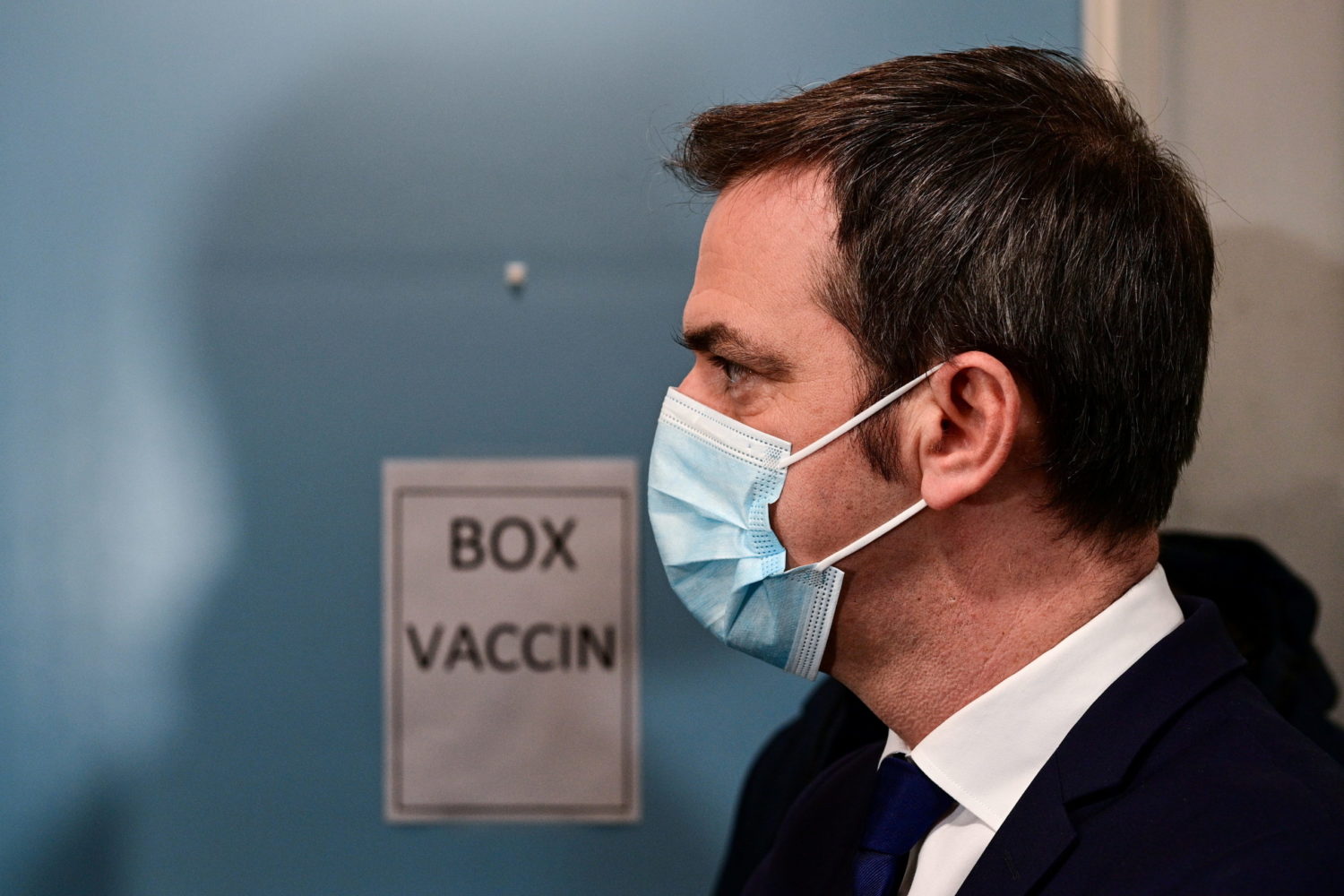
PARIS (Reuters) -France is stepping up its COVID-19 vaccine rollout by widening further its first target group to include more health workers and simplifying a cumbersome process to deliver jabs more quickly, Health Minister Olivier Veran said on Tuesday.

France’s inoculation campaign got off to a slow start, hampered in part by red tape and President Emmanuel Macron’s decision to tread warily in one of the most vaccine-skeptical countries in the world.

But France has fallen behind neighbors such as Britain and Germany, and the president is now demanding the vaccination program be expedited.

Veran told RTL radio that the government was going to “accelerate and simplify our vaccination strategy”.

Some 300 vaccination centers would be operational from next week, the minister said, after initially ruling out such centers.

The original plan had been for the first phase of the vaccine rollout, which began in France on Dec. 27, to focus on nursing home residents and their carers. By the end of the first week, France had delivered just over 500 COVID-19 shots.

Over the weekend, the first hospital staff began receiving the vaccine. The government has now added paramedics and health workers to the first target group.

By the end of January, France will have begun vaccinating people aged 75 and above who are living at home, Veran said.

The head of the union of pharmacies – whose ubiquitous network helps administer millions of flu jabs every year – urged the government to allow it to do the same for COVID-19 shots.

“If we only rely on vaccination centers, we can be sure the level of vaccination by June will be mediocre. That would be a disaster,” Gilles Bonnefond of the USPO pharmacists’ union told, Reuters in an interview. “We can be operational in a week.”

The coronavirus has claimed the lives of 65,415 people in France, the seventh-highest death toll in the world.

France received an initial 500,000 doses of the vaccine developed by Pfizer and Germany’s BioNTech and was due to receive an additional 500,000 per week. It will also get 500,000 doses per month of Moderna’s vaccine once it obtains regulatory approval in Europe and France.

MORE JABS

Rules demanding that only a doctor or a nurse under the direct supervision of a doctor inject the vaccine will be eased. Veran said a doctor would be allowed to supervise multiple nurses at any one time in a vaccination center.

Similarly, rules requiring that any person wanting a COVID-19 vaccine must hold a consultation with a doctor first would also be made simpler.

Veran also said about 10 to 15 cases of the new variant of the coronavirus first seen in Britain had been detected in France. Its rapid spread through southern England compelled British Prime Minister Boris Johnson to announce a third nationwide lockdown on Monday.

France remains under nightly curfew. Restaurants, bars, museums and cinemas are still closed. Veran said he hoped France would be able to open its ski resorts for the February holidays, but that such a move would depend on how active the virus was.

(Reporting by Dominique Vidalon, Sudip Kar-Gupta and Michel Rose; Writing by Richard Lough; Editing by Ed Osmond, Raissa Kasolowsky and Alex Richardson)

U.S. hits Iran with fresh sanctions

WASHINGTON (Reuters) -The United States on Tuesday blacklisted a Chinese company that makes elements for steel production, 12 Iranian steel and metals makers and three foreign-based sales agents of a major Iranian metals and mining holding company, seeking to deprive Iran of revenues.

In a statement, the U.S. Treasury Department named the China-based company as Kaifeng Pingmei New Carbon Materials Technology Co Ltd. (KFCC), saying it specialized in the manufacture of carbon materials and provided thousands of metric tonnes of materials to Iranian steel companies between December 2019 and June 2020.

Among the 12 Iranian companies blacklisted are the Pasargad Steel Complex and the Gilan Steel Complex Co, both of which were designated under Executive Order 13871 for operating in the Iranian steel sector.

The others are: Iran-based Middle East Mines and Mineral Industries Development Holding Co (MIDHCO), Khazar Steel Co, Vian Steel Complex, South Rouhina Steel Complex, Yazd Industrial Constructional Steel Rolling Mill, West Alborz Steel Complex, Esfarayen Industrial Complex, Bonab Steel Industry Complex, Sirjan Iranian Steel and Zarand Iranian Steel Co.

The Treasury said it was also designating MIDHCO’s Germany-based subsidiary GMI Projects Hamburg GmbH, its China-based World Mining Industry Co Ltd and U.K.-based GMI Projects Ltd for being owned or controlled by MIDHCO.

“The Trump Administration remains committed to denying revenue flowing to the Iranian regime as it continues to sponsor terrorist groups, support oppressive regimes, and seek weapons of mass destruction,” Treasury Secretary Steven Mnuchin said in the statement.

(Reporting by Arshad Mohammed, Daphne Psaledakis and Doina Chiacu; writiing by Arshad Mohammed; editing by Doina Chiacu and Jonathan Oatis)

Teen charged in Wisconsin protest shootings to plead not guilty on all counts -lawyer

(Reuters) – Kyle Rittenhouse, the teenager charged with fatally shooting two men and wounding a third at a demonstration in Kenosha, Wisconsin, in August, is expected to plead not guilty to all counts at an arraignment on Tuesday, his lawyer said.

Rittenhouse was charged with first-degree reckless homicide and five other criminal counts related to the shootings, which occurred on Aug. 25 at a demonstration that followed the fatal shooting of a Black man, Jacob Blake, by a white police officer days earlier.

Rittenhouse, who faces a trial in Kenosha County, will plead not guilty to all counts at the hearing, scheduled for 1 p.m. local time (1900 GMT), his lawyer Mark Richards told Reuters in an email.

The teenager was freed after his attorneys posted his $2 million bond in November. The source of the money was unclear, but his attorneys had led a drive to raise the funds from donations.

Rittenhouse’s lawyers have said Rittenhouse, who turned 18 on Sunday, acted in self defense when he opened fire with a Smith & Wesson M&P 15 rifle at the protest.

The police shooting of Blake on Aug. 23, captured on cellphone video, drew a mix of civil rights demonstrators, anarchists and right-wing militias to the streets of Kenosha, a city of 100,000 people about 40 miles (65 km) south of Milwaukee.

Officer Rusten Sheskey shot at Blake’s back seven times from close range as Blake opened the door of his car, striking him four times and paralyzing him from the waist down. Officials said there was a knife inside Blake’s car.

Blake’s lawyer, Ben Crump, disputed that there was a knife in the car and said Blake was attempting to break up a fight between two women when he was shot in front of three of his sons, aged 3, 5 and 8.

Prosecutors are expected to decide whether to charge Sheskey this week.

(Reporting by Gabriella Borter, Editing by Rosalba O’Brien)

Eyeing Gulf détente, Saudi Arabia opens summit with call to counter Iran threat

By Aziz El Yaakoubi

AL-ULA, Saudi Arabia (Reuters) -Saudi Arabia’s Crown Prince Mohammed bin Salman opened a Gulf Arab summit on Tuesday by taking aim at Iran and lauding a deal towards ending a long-running dispute with Qatar.

Prince Mohammed embraced Qatar’s emir, Sheikh Tamim bin Hamad al-Thani, on the airport tarmac in the historic Saudi city of al-Ula, an important signal of hopes to bury a conflict between major U.S. allies in the Middle East.

Leaders of the Gulf countries signed a document, although the contents were not immediately released.

Ahead of the gathering, Kuwait had announced that Saudi Arabia, which along with allies boycotted Doha in mid-2017, would reopen its airspace and borders to Qatar. A senior U.S. official said the deal would be signed in the presence of White House senior adviser Jared Kushner.

Kushner, tasked by U.S. President Donald Trump to work on the Gulf rift, was seen in the room in televised footage as Prince Mohammed delivered the opening speech.

“These efforts … led to the al-Ula agreement which will be signed at this blessed summit and which confirms Gulf, Arab and Islamic unity and stability,” Prince Mohammed, the kingdom’s de facto ruler, said without elaborating on the deal.

He said the threat posed by Iran’s nuclear and ballistic missile programs and it’s “subversive and destructive plans” necessitated “serious action” by the global community.

His father, King Salman, who chaired the last annual gathering, was not seen during the opening session of the summit held in a mirrored building reflecting the desert landscape.

The apparent breakthrough in the Gulf row is the latest in a series of Middle East deals sought by Washington to close ranks against Iran, following agreements between Israel and Arab states.

Saudi Arabia, the United Arab Emirates, Bahrain and Egypt severed diplomatic, trade and travel ties with Qatar over allegations Doha supports terrorism, a charge it denies.

While Riyadh made clear it intended to lift the embargo, the other three states did not immediately comment on the issue. But the U.S. official said “it’s our expectation” they would also join and that Doha will suspend lawsuits related to the boycott.

WORKING THE PHONES

Kushner was making phone calls on the emerging deal until the early hours of Monday, the U.S. official said.

“The détente within the GCC is very unlikely to significantly affect geopolitical dynamics beyond the Gulf.”

All the states are U.S. allies. Qatar hosts the region’s largest U.S. military base, Bahrain is home to the U.S. Navy’s Fifth Fleet, and Saudi Arabia and the UAE host U.S. troops.

Qatar says the boycott aims to curb its sovereignty.

The other countries had set Doha 13 demands, including closing Al Jazeera TV, shuttering a Turkish base, cutting links to the Muslim Brotherhood and downgrading ties with Iran.

(Additional reporting by Raya Jalabi in Dubai Writing by Ghaida Ghantous, Editing by Tom Hogue, John Stonestreet, Nick Macfie and Timothy Heritage)

Iran tests drones in military exercise

DUBAI (Reuters) – Iran launched exercises featuring a wide array of domestically produced drones on Tuesday, Iranian media reported, days after the anniversary of the U.S. killing of a top Iranian general by a drone strike in Iraq.

Iran and the regional forces it backs have increasingly relied in recent years on drones in Yemen, Syria, Iraq and the Strait of Hormuz at the mouth of the Gulf.

Iran’s armed forces are to test combat drones used as bombers, interceptors and in reconnaissance missions in the two-day exercises in central Semnan province, the semi-official Fars news agency said.

“The fingers of our heroic armed forces are on the trigger, and if enemies commit the slightest mistake, the armed forces will surely respond fiercely,” said Mohammad Baqeri, chief of staff of the armed forces, quoted by state media.

Foreign Minister Mohammad Javad Zarif has said U.S. President Donald Trump may be trying to find an excuse to attack Iran in his last days in office, or Israel might try to provoke a war. Israel rejected the allegation.

The exercises coincided with increased tensions between Iran and the United States, two days after the first anniversary of the killing of Iranian general Qassem Soleimani in a U.S. drone strike at Baghdad airport.

Beyond surveillance, Iranian drones can drop munitions and also carry out a “kamikaze” flight when loaded with explosives and flown into a target, according to a U.S. official who spoke to Reuters.

Iran has developed a large domestic arms industry in the face of international sanctions and embargoes barring it from importing many weapons. Western military analysts say Iran sometimes exaggerates its weapons capabilities, though concerns about its ballistic missiles contributed to Washington leaving the nuclear pact.

(Reporting by Dubai newsroom; Editing by Peter Graff)