Top Trump aide says government shutdown may go into New Year

FILE PHOTO: White House Office of Management and Budget Director Mick Mulvaney speaks about of U.S. President Donald Trump's budget in the briefing room of the White House in Washington, U.S., March 16, 2017. REUTERS/Kevin Lamarque/File Photo

By Jan Wolfe

WASHINGTON (Reuters) – U.S. President Donald Trump’s budget director and chief of staff on Sunday said the partial U.S. government shutdown could continue to Jan. 3, when the new Congress convenes and Democrats take over the House of Representatives.

“It’s very possible this shutdown will go beyond (December) the 28th and into the new Congress,” Mick Mulvaney said on Fox News Sunday.

“I don’t think things are going to move very quickly here for the next few days” because of the Christmas holiday, added Mulvaney, who serves as director of the Office of Management and Budget and was named acting White House chief of staff 10 days ago.

The U.S. Senate adjourned on Saturday, unable to break an impasse over Trump’s demand for more funds for a wall on the border with Mexico that Democrats are unwilling to accept.

Mulvaney said the White House made a “counter-offer” to Democrats on funding for border security that fell between the Democratic offer of $1.3 billion and Trump’s demand for $5 billion.

As part of those talks on Saturday, Vice President Mike Pence offered to drop the demand for $5 billion for a border wall, substituting instead $2.1 billion, ABC News reported, citing unnamed sources.

A Democratic source familiar with the negotiations said real discussions have been happening between Democratic lawmakers and Republican Senator Richard Shelby, the chairman of the Appropriations Committee, who has been talking to the White House. It was unclear what Democrats had offered.

Mulvaney sought to shift blame for the partial shutdown to Nancy Pelosi, the Democratic nominee for speaker of the U.S. House of Representatives, saying she might hold up negotiations to ensure she secures the position.

“I think she’s in that unfortunate position of being beholden to her left wing to where she cannot be seen as agreeing with the president on anything until after she is speaker,” Mulvaney said. ”If that’s the case, again, there’s a chance we go into the next Congress.”  

Pelosi spokesman Drew Hammill disputed that account, saying in a statement: “As Mr. Mulvaney well knows, House Democrats are united in their opposition to the President’s immoral, expensive and ineffective wall.”

The White House should “stop the posturing and start serious bipartisan talks,” Hammill said.

Financing for about a quarter of federal government programs – including the departments of Homeland Security, Justice and Agriculture – expired at midnight on Friday. More than 400,000 “essential” employees in those agencies will work without pay until the dispute is resolved. Another 380,000 will be “furloughed,” meaning they are put on temporary leave.

Law enforcement efforts, border patrols, mail delivery and airport operations will keep running.

Building a wall to try to prevent migrants from entering the United States illegally was a central plank of Trump’s presidential campaign, but Democrats are vehemently opposed and have rejected his funding request.

Trump reiterated his push for border security on Sunday, saying on Twitter that “the only way” to stop drugs, gangs, and human trafficking at the border was with a wall or barrier.

“Drones and all of the rest are wonderful and lots of fun, but it is only a good old fashioned Wall that works!,” the president said in the tweet.

Earlier in the week, leaders in both the Senate and House thought they had reached a deal that Trump would sign that contained less money for border security, only to watch the president, under pressure from conservatives, re-assert his demand for $5 billion at the last minute.

Senator David Perdue, a Republican from Georgia on the Senate Banking Committee, said on Fox News’ “Sunday Morning Futures” that he thought a deal this week was possible.

“I spoke to the president last night, he wants that,” Purdue said, adding: “I’m hopeful that cooler heads will prevail and we’ll get to some number between $1.6 (billion) and $5 billion on that.”

(Reporting by Jan Wolfe and Lesley Wroughton; Editing by Mary Milliken, Daniel Wallis and Rosalba O’Brien)

Turkey says it will take over fight against Islamic State after U.S. pull-out

FILE PHOTO: Turkish President Tayyip Erdogan speaks during a joint news conference with his Iranian counterpart Hassan Rouhani (not seen) after their meeting in Ankara, Turkey, December 20, 2018. REUTERS/Umit Bektas

By Ece Toksabay and Dahlia Nehme

ISTANBUL/BEIRUT (Reuters) – Turkey will take over the fight against Islamic State militants in Syria as the United States withdraws its troops, President Tayyip Erdogan said on Friday, in the latest upheaval wrought by Washington’s abrupt policy shift.

The surprise announcement by U.S. President Donald Trump this week that he would withdraw roughly 2,000 troops has felled a pillar of American policy in the Middle East. Critics say Trump’s decision will make it harder to find a diplomatic solution to Syria’s seven-year-old conflict.

For Turkey, the step removes a source of friction with the United States. Erdogan has long castigated his NATO ally over its support for Syrian Kurdish YPG fighters against Islamic State. Turkey considers the YPG a terrorist group and an offshoot of the armed Kurdistan Workers’ Party (PKK), fighting for Kurdish autonomy across the border on Turkish soil.

In a speech in Istanbul, Erdogan said Turkey would mobilize to fight remaining Islamic State forces in Syria and temporarily delay plans to attack Kurdish fighters in the northeast of the country – shifts both precipitated by the American decision to withdraw.

The news was less welcome for other U.S. allies. Both France and Germany warned that the U.S. change off course risked damaging the campaign against Islamic State, the jihadists who seized big swathes of Iraq and Syria in 2014-15 but have now been beaten back to a sliver of Syrian territory.

Likewise, the U.S.-backed militia spearheaded by the YPG said a Turkish attack would force it to divert fighters from the battle against Islamic State to protect its territory.

Islamic State launched an attack in Syria’s southeast against the U.S.-backed SDF militia, employing car bombs and dozens of militants.

“We will be working on our operational plans to eliminate ISIS elements, which are said to remain intact in Syria, in line with our conversation with President Trump,” Erdogan said, referring to Islamic State.

The Turkish president had announced plans last week to start an operation east of the Euphrates River in northern Syria to oust the YPG from the area that it largely controls. This week, he said the campaign could come at any moment. But on Friday, he cited the talk with Trump as a reason to wait.

“Our phone call with President Trump, along with contacts between our diplomats and security officials and statements by the United States, have led us to wait a little longer,” he said.

“We have postponed our military operation against the east of the Euphrates river until we see on the ground the result of America’s decision to withdraw from Syria.”

The Turkish president said, however, that this was not an “open-ended waiting period”.

Turkey has repeatedly voiced frustration over what it says is the slow implementation of a deal with Washington to pull YPG fighters out of Manbij, a town in mainly Arab territory west of the Euphrates in northern Syria.

The United States will probably end its air campaign against IS in Syria when it pulls out troops, U.S. officials have said, as Trump has been forced to defend the planned withdrawal against criticism from allies abroad and at home.

‘TIME FOR OTHERS TO FIGHT’

Trump maintained that IS had been wiped out, a view not shared by key allies, that Washington had been doing the work of other countries and it was “time for others to finally fight”.

His defense secretary, Jim Mattis, opposed the decision and abruptly announced on Thursday he was resigning after meeting with the president.

In a candid letter to Trump, the retired Marine general emphasized the importance of “showing respect” to allies that have voiced surprise and concern about the president’s decision.

Russia said on Friday it did not understand what the United States’ next steps in Syria would be, adding that chaotic and unpredictable decision-making in Washington was creating discomfort in international affairs.

Several of Trump’s fellow Republicans in Congress, joined by opposition Democrats, urged the president to reverse course, saying the withdrawal would strengthen the hand of Russia and Iran in Syria and enable a resurgence of Islamic State.

Trump has given no sign of changing his mind. He promised to remove forces from Syria during his 2016 election campaign.

The roughly 2,000 U.S. troops in Syria, many of them special forces, were ostensibly helping to combat Islamic State but were also seen as a possible bulwark against Syrian President Bashar al-Assad, who has retaken much of the country from his foes in the multi-sided civil war, with military help from Iran and Russia.

IS declared a caliphate in 2014 after seizing parts of Syria and Iraq. The ultra-hardline Sunni militants established their de facto capital in the Syrian city of Raqqa, using it as a base to plot attacks in Europe.

A senior U.S. official last week said Islamic State was down to the last 1 percent of the territory it once held. The group has no remaining territory in Iraq, though militants have resumed attacks since their defeat there last year.

Islamic State launched an attack on Friday on positions held by the SDF in Syria’s southeast and the U.S.-led coalition mounted air strikes in the area, an SDF official said.

Kurdish-led forces in northern Syria may not be able to continue to hold Islamic State prisoners if the situation in the region gets out of control after a U.S. pullout, top Syrian Kurdish official Ilham Ahmed said on Friday.

(Additional reporting by Sarah Dadouch, Ali Kucukgocmen and Ezgi Erkoyun in Istanbul and Tuvan Gumrukcu in Ankara and John Irish in Paris; Writing by David Dolan; Editing by Mark Heinrich and Andrew Roche)

U.S. to end air war against Islamic State in Syria

FILE PHOTO: Syrian Democratic Forces and U.S. troops are seen during a patrol near Turkish border in Hasakah, Syria November 4, 2018. REUTERS/Rodi Said/File Photo

By Phil Stewart and Ellen Francis

WASHINGTON/BEIRUT (Reuters) – The United States will end its air campaign against Islamic State in Syria when it pulls out troops, U.S. officials said, sealing an abrupt reversal of policy which has alarmed Western allies as well as Washington’s Kurdish battle partners.

The Syrian Democratic Forces (SDF), which have been fighting Islamic State with U.S. support for three years, said President Donald Trump’s withdrawal of troops would grant the militants breathing space to regroup at a critical stage in the conflict and leave Syrians stuck between “the claws of hostile parties” fighting for territory in the seven-year-old war.

Trump’s announcement on Wednesday upended a central pillar of American policy in the Middle East and stunned U.S. lawmakers and allies.

Western allies including France, Britain and Germany described Trump’s assertion of victory as premature. France, a leading member of the U.S.-led coalition, said it would keep its troops in northern Syria for now because Islamic State militants had not been wiped out.

Trump defended his decision on Thursday, tweeting that he was fulfilling a promise from his 2016 presidential campaign to leave Syria. The United States was doing the work of other countries, including Russia and Iran, with little in return and it was “time for others to finally fight,” he wrote.

U.S. officials said Trump’s order to withdraw troops also signifies an end to the U.S. air campaign against Islamic State in Syria, which has been critical to rolling back the militants there and in neighboring Iraq, with more than 100,000 bombs and missiles fired at targets in the two countries since 2015.

The SDF, supported by about 2,000 U.S. troops, are in the final stages of a campaign to recapture areas seized by the militants.

But they face the threat of a military incursion by Turkey, which considers the Kurdish YPG fighters who spearhead the force to be a terrorist group, and Syrian forces – backed by Russia and Iran – committed to restoring President Bashar al-Assad’s control over the whole country.

The SDF said the battle against Islamic State had reached a decisive phase that required more support, not a precipitate U.S. withdrawal.

THREAT ALIVE

France’s Europe Minister Nathalie Loiseau said: “For now, of course we are staying in Syria because the fight against Islamic State is essential.”

France has about 1,100 troops in Iraq and Syria providing logistics, training and heavy artillery support as well as fighter jets. In Syria, it has dozens of special forces, military advisers and some foreign office personnel.

A British junior defense minister said he disagreed with Trump. “(Islamic State) has morphed into other forms of extremism and the threat is very much alive,” Tobias Ellwood said.

Islamic State declared a caliphate in 2014 after seizing large swathes of Syria and Iraq. The hardline group established its de facto capital in the Syrian city of Raqqa, using it as a base to plot attacks in Europe.

According to U.S. estimates, the group oversaw about 100,000 square kms (39,000 square miles) of territory, with about 8 million people under Islamic State control. It had estimated revenues of nearly $1 billion a year.

A senior U.S. official last week said the group was down to its last 1 percent of the territory it once held. It has no remaining territory in Iraq, although militants have resumed insurgent attacks since the group’s defeat there last year.

Russian President Vladimir Putin said he largely agreed with Trump that Islamic State had been defeated in Syria but added there was a risk it could recover.

He also questioned what Trump’s announcement would mean in practical terms, saying there was no sign yet of a withdrawal of U.S. forces whose presence in Syria Moscow says is illegitimate.

Israel will continue to act “very aggressively against Iran’s efforts to entrench in Syria,” Israeli Prime Minister Benjamin Netanyahu said.

Neighboring Turkey, which has threatened an imminent military incursion targeting the U.S.-allied Kurdish YPG fighters in northern Syria, has not commented directly on Trump’s decision, although an end to the U.S.-Kurdish partnership will be welcomed in Ankara.

Kurdish militants east of the Euphrates in Syria “will be buried in their ditches when the time comes”, state-owned Anadolu news agency reported Defence Minister Hulusi Akar as saying. Turkey considers the YPG a terrorist group and an extension of the outlawed Kurdistan Workers Party (PKK).

Turkey has intervened to sweep YPG and Islamic State fighters from parts of northern Syria that lie west of the Euphrates over the past two years. It has not gone east of the river, partly to avoid direct confrontation with U.S. forces.

(Additional reporting by Daren Butler in Istanbul and John Irish in Paris; Writing by Dominic Evans; Editing by Janet Lawrence)

Senate easily approves criminal justice legislation

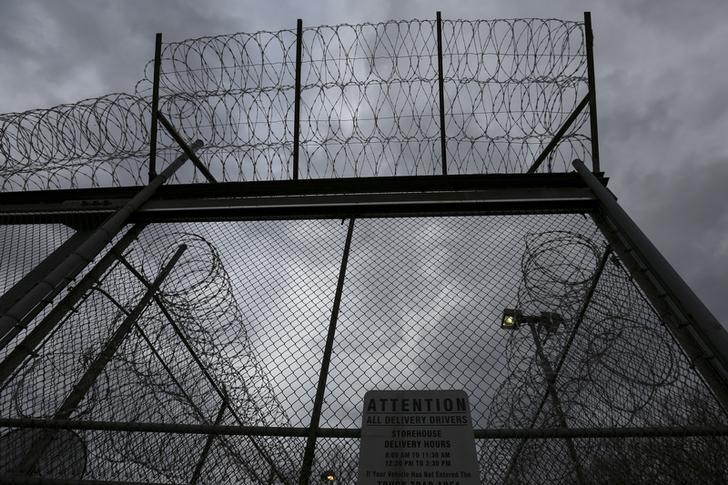
The front gate is pictured at the Taconic Correctional Facility in Bedford Hills, New York April 8, 2016. REUTERS/Carlo Allegri/ File Photo

By Richard Cowan

WASHINGTON (Reuters) – The U.S. Senate on Tuesday overwhelmingly passed legislation long in the making and backed by President Donald Trump to reduce sentences for certain prison inmates.

By a vote of 87-12, the Republican-led Senate passed and sent to the House of Representatives the “First Step Act,” which would ease the way for some prisoners to win early release to halfway houses or home confinement.

The legislation also aims to establish programs to head off repeat offenders and protect first-time non-violent offenders from harsh mandatory minimum sentences.

Earlier this year, the House passed a bipartisan bill focusing on prison reforms, which did not include sentencing reforms.

With little time left as Congress tries to wrap up its session this month, Senate proponents are hoping their broader version is accepted by the Republican-controlled House.

Trump congratulated the Senate on passing the bill and said he looked forward to signing it into law.

“This will keep our communities safer, and provide hope and a second chance, to those who earn it. In addition to everything else, billions of dollars will be saved,” Trump tweeted.

The United States leads the world in prison population, with about 2.2 million people incarcerated at the end of 2016.

During Senate debate of the bill, Democratic Senator Dick Durbin noted the United States had 5 percent of the world’s population, but 25 percent of the world’s prisoners.

He added that minorities bore the brunt of tough minimum sentences that judges have been directed to impose as a result of a decades-old law that has exploded the numbers of incarcerated people.

“The majority of illegal drug users and dealers in America are white. But three-quarters of the people serving time in prison for drug offenses are African-American or Latino,” Durbin said.

In response to criticism from some conservatives that the legislation could prompt the release of violent criminals into society, the bipartisan measure was reworked to scale back the discretion judges would have in some sentencing cases.

Before passing the bill, the Senate defeated amendments by Republican Senators Tom Cotton and John Kennedy that would have further tightened requirements.

Those amendments would have excluded child molesters and other violent felons from early release, required notification of victims before offenders are let out of prison early and included a plan to track the effectiveness of anti-recidivism programs.

The push for the legislation gained momentum as progressive Democrats were joined by fiscal conservatives, who saw the potential for savings if the U.S. prison population was reduced, along with religious conservatives who preached the importance of giving people a second chance.

(Reporting by Richard Cowan; Additional reporting by Eric Beech; Editing by Peter Cooney)

Congress to push stop-gap funding bill with no border wall money

FILE PHOTO: Workers on the U.S. side, work on the border wall between Mexico and the U.S., as seen from Tijuana, Mexico, December 13, 2018. REUTERS/Carlos Garcia Rawlins

WASHINGTON (Reuters) – The U.S. Congress, aiming to avoid a partial government shutdown at the end of this week, began advancing legislation on Wednesday to temporarily fund several federal agencies through Feb. 8, but without money for a U.S.-Mexico border wall that President Donald Trump demanded.

“We’ll soon take up a simple measure that will continue government funding into February so that we can continue this vital (border security) debate after the new Congress has convened” in January, said Senate Majority Leader Mitch McConnell.

A Senate Democratic aide said the appropriations bill, which would keep the Department of Homeland Security and several other agencies operating on a temporary basis, was expected to pass the Senate either on Wednesday or Thursday.

The House of Representatives would then have to pass the bill and hope that Trump signs it into law, avoiding a shutdown because existing funding for the agencies will expire at midnight on Friday.

By postponing decisions on spending for the agencies that also includes the departments of Justice, Commerce, Interior and Agriculture, Democrats will be in a somewhat stronger bargaining position next year when they take majority control of the House.

Democrats and many Republicans have challenged the wisdom of giving Trump $5 billion this year, and ultimately a total of at least $24 billion, to build a wall that they argue would be less effective in securing the border than building on a mix of tools already in place.

In a last-ditch attempt to resolve the impasse this year, Trump and McConnell on Tuesday proposed giving Trump a $1 billion fund that he could use at his discretion for border security.

Senate Democratic Leader Chuck Schumer labeled that a “slush fund” that would lack the votes to pass Congress.

On Wednesday, McConnell attacked Democrats for rejecting it, saying, “It seems like political spite for the president may be winning out over sensible policy.”

(Reporting by Richard Cowan; Editing by Chizu Nomiyama and Bernadette Baum)

Trump-backed criminal justice bill heads for votes in Senate

FILE PHOTO: Jail cells are seen in the Enhanced Supervision Housing Unit at the Rikers Island Correctional facility in New York March 12, 2015. REUTERS/Brendan McDermid/File Photo

WASHINGTON (Reuters) – The U.S. Senate on Monday prepared to vote this week on bipartisan criminal justice legislation supported by President Donald Trump, although critics were forcing debate on a series of changes before allowing a decision on passage.

The “First Step Act” would ease the way for certain prison inmates to win early release to halfway houses or home confinement. It also would create programs to reduce recidivism and protect first-time non-violent offenders from harsh mandatory minimum sentences.

Senate Majority Leader Mitch McConnell noted that a “number” of senators still had problems with the bill.

But in a procedural move on Monday evening, the Senate overwhelmingly voted to advance the measure, clearing the way for debate on amendments before a possible vote on passage later in the week.

Even with Senate passage, the House of Representatives would still have to act in the waning days of this Congress before it could be sent to Trump for signing into law.

Conservative senators already have won some changes to the bill, paring back the discretion judges would have to sentence felons with criminal histories beneath mandatory minimums.

At the end of 2016, according to U.S. Justice Department figures, nearly 2.2 million people were incarcerated in prisons or local jails.

That makes the United States the world leader in prison population, according to private estimates.

Republican senators Tom Cotton and John Kennedy were pushing for approval of three amendments that would further tighten requirements.

They address excluding child molesters and other violent felons from early release, notifying victims before offenders are let out early and a measure to track the effectiveness of anti-recidivism programs, according to Senate aides.

(Reporting by Richard Cowan; Editing by Dan Grebler)

Mexico’s president did not discuss border wall with Trump

FILE PHOTO: Mexico's new President Andres Manuel Lopez Obrador arrives for an event to unveil his plan for oil refining, in Paraiso, Tabasco state, Mexico, December 9, 2018. REUTERS/Alexandre Meneghini

By Anthony Esposito and Doina Chiacu

MEXICO CITY/WASHINGTON (Reuters) – Mexican President Andres Manuel Lopez Obrador said on Thursday he has not discussed a proposed border wall with President Donald Trump, as the U.S. leader seemingly backtracked on threats to make Mexico pay for the controversial project.

“We have not discussed that issue, in any conversation. … It was a respectful and friendly conversation,” Lopez Obrador told reporters following a tweet in which the U.S. president said a new trade deal with Mexico and Canada would cover the cost of a wall.

The two leaders spoke by telephone on Wednesday. Lopez Obrador said they discussed the possibility of creating a joint program for development and job creation in Central America and Mexico.

One of Trump’s key campaign promises was to build the border wall and he had long pledged that Mexico — not U.S. taxpayers — would fund it.

In a Twitter post early on Thursday, Trump again insisted that Mexico will foot the bill for the border wall.

He wrote that payment will begin with savings for the United States as a result of the renegotiated trade deal between the United States, Mexico and Canada. “Just by the money we save, MEXICO IS PAYING FOR THE WALL!”

Mexico has repeatedly rejected Trump’s demand that it pay for the project, and it is unlikely the country’s new president will reverse that course.

Funding for the border wall has been a sticking point in spending bills before the U.S. Congress, and Trump clashed with leading Democrats over the issue during an Oval Office meeting on Tuesday.

One of them, Senate Democratic leader Chuck Schumer, taunted Trump over his Mexico claim later on Thursday.

“Mr. President: If you say Mexico is going to pay for the wall (which I don’t believe), then I guess we don’t have to! Let’s fund the government,” Schumer retorted in his own Twitter post.

Lopez Obrador said he also discussed a possible meeting with Trump in Washington.

“He invited me. I’m also able to go to Washington, but I think that both for him and for us there must be a reason and I think the most important thing would be to sign this agreement or meet with that purpose,” said Lopez Obrador.

(Reporting by Anthony Esposito in Mexico City and Doina Chiacu in Washington; editing by Frank Jack Daniel and Jonathan Oatis)

Trump administration asks top court to restore asylum order

FILE PHOTO: U.S. President Donald Trump delivers remarks on immigration and border security in the Roosevelt Room of the White House in Washington, U.S., November 1, 2018. REUTERS/Kevin Lamarque/File Photo

By Andrew Chung

(Reuters) – President Donald Trump’s administration asked the U.S. Supreme Court on Tuesday to let his order barring asylum for immigrants who enter the United States illegally take effect even as litigation over the matter proceeds.

The U.S. Justice Department asked the court to lift a temporary restraining order against the asylum rules issued by San Francisco-based U.S. District Judge Jon Tigar. Trump has taken a hard line toward legal and illegal immigration since taking office last year.

Citing what he called an overwhelmed immigration system, Trump issued a proclamation on Nov. 9 that authorities process asylum claims only for migrants crossing the southern U.S. border at an official port of entry. Tigar blocked the rules on Nov. 19, drawing Trump’s ire.

The San Francisco-based 9th U.S. Circuit Court of Appeals refused on Friday to lift Tigar’s injunction pending an appeal by the administration, saying the government “has not established that it is likely to prevail.”

The Justice Department said in its request to the Supreme Court that the injunction frustrated the government’s effort to re-establish control over the southern border and reduce illegal crossings.

Trump issued his proclamation alongside a new administration rule that effectively prohibited asylum for migrants crossing from Mexico outside a port of entry. The policy came as the government sought ways to block thousands of Central Americans traveling in caravans to escape violence and poverty at home from entering the United States.

Immigrant rights groups immediately sued, arguing the policy violated federal immigration and administrative law.

In his ruling, Tigar said Congress clearly mandated that immigrants were eligible for asylum regardless of where they enter the country.

The ruling prompted Trump to blast the 9th Circuit as a “disgrace” and dismiss Tigar as an “Obama judge.” Tigar was appointed to the bench by former President Barack Obama, a Democrat.

That criticism led to an extraordinary rebuke by U.S. Chief Justice John Roberts, who issued a public response to Trump.

“We do not have Obama judges or Trump judges, Bush judges or Clinton judges,” said Roberts, a conservative who was appointed by Republican former President George W. Bush.

(Reporting by Andrew Chung in New York; Editing by Will Dunham and Peter Cooney)

Reluctant U.S. Supreme Court on collision course with Trump

FILE PHOTO: The Supreme Court is seen ahead of the start of it's new term in Washington, U.S., October 1, 2018. REUTERS/Aaron P. Bernstein/File Photo

By Lawrence Hurley

WASHINGTON (Reuters) – The U.S. Supreme Court’s reluctance to take up new cases on volatile social issues is putting it on a collision course with President Donald Trump, whose Justice Department is trying to rush such disputes through the appeals system to get them before the nine justices as quickly as possible.

That tension could come to head in 2019 if the court continues to avoid cases that the Republican president’s lawyers are aggressively trying to bring to the justices. The court’s 5-4 conservative majority includes Trump appointees Brett Kavanaugh and Neil Gorsuch.

While Trump has suffered a series of setbacks in lower federal courts since taking office last year, he has collected major victories at the Supreme Court. Most notably, the court in June upheld in a 5-4 ruling Trump’s travel ban targeting people from several Muslim-majority countries, with Gorsuch casting a pivotal vote after lower courts had blocked the policy.

But since Kavanaugh joined the bench in October after a bitter Senate confirmation fight, the court has declined to take up appeals by conservative-leaning states seeking to deny public funds to women’s healthcare and abortion provider Planned Parenthood, while postponing action on a dispute over federal employment protections opposed by Trump’s administration for gay and transgender people.

At the same time, the administration has been seeking to leap-frog more liberal-leaning lower courts to get cases on divisive questions over immigration, transgender rights and the U.S. census before the justices more rapidly.

“The court seems to be in go-slow mode at the moment when it comes to big cases. The court appears content to focus on meat-and-potatoes cases rather than blockbuster ones,” said Kannon Shanmugam, a lawyer who regularly argues cases before the justices.

Trump has frequently railed against the lower courts, especially the liberal-leaning San Francisco-based 9th U.S. Circuit Court of Appeals, that have ruled against him in some major cases including the travel ban.

In a setback to social and religious conservatives who strongly support Trump, the high court on Monday declined to take up appeals by Kansas and Louisiana to deny Planned Parenthood public funds under the Medicaid health insurance program for the poor.

Three of the court’s five conservatives voted to hear the matter, but with conservatives Kavanaugh and Chief Justice John Roberts declining to join them they fell a vote short of the required four needed to take up a case.

Conservative Justice Clarence Thomas accused his colleagues of ducking the case because of its controversial nature.

Last week, the court put off action in another divisive case involving whether federal employment law outlaws discrimination against gay and transgender people. There are three appeals on the issue begging attention from the court, but the justices have not yet acted.

The court also has delayed action in a case concerning Republican-drawn U.S. congressional districts in North Carolina that were struck down by a lower court that found the boundaries were drawn to ensure lopsided electoral victories for their party against rival Democrats.

FILE PHOTO: Justices of the U.S. Supreme Court including (L-R) Associate Justices Stephen Breyer, Neil Gorsuch, Elena Kagan, Brett Kavanaugh, Clarence Thomas, Chief Justice John Roberts and Associate Justice Samuel Alito await the arrival of the casket of former U.S. President George H.W. Bush inside the U.S. Capitol Rotunda in Washington, U.S., December 3, 2018. REUTERS/Jonathan Ernst/Pool/File Photo

FILE PHOTO: Justices of the U.S. Supreme Court including (L-R) Associate Justices Stephen Breyer, Neil Gorsuch, Elena Kagan, Brett Kavanaugh, Clarence Thomas, Chief Justice John Roberts and Associate Justice Samuel Alito await the arrival of the casket of former U.S. President George H.W. Bush inside the U.S. Capitol Rotunda in Washington, U.S., December 3, 2018. REUTERS/Jonathan Ernst/Pool/File Photo

‘BEING VERY CAREFUL’

“It does appear they are being very careful based on their actions so far. They don’t seem eager to take on avoidable, potentially controversial cases. It may be that they have a heightened sensitivity right now,” Shannon Minter, legal director of the National Center for Lesbian Rights advocacy group, said of the justices.

The court early next year must decide whether to hear two high-profile appeals by Trump’s administration. One involves the president’s bid to end deportation protections for hundreds of thousands of illegal immigrants known as “Dreamers” who were brought into the United States as children. The other involves his proposed limits on transgender people serving in the military.

Both policies were blocked by lower courts.

In an unusually aggressive strategy, Solicitor General Noel Francisco, a conservative lawyer who is Trump’s top Supreme Court advocate, sought to bypass lower appeals courts by asking the justices to take up both cases early in the appellate process.

Of the two cases, the court may be more likely to hear the immigration dispute, according to Nicole Saharsky, a former Justice Department lawyer now in private practice. The transgender case “seems like more of a reach,” Saharsky added.

Jonathan Adler, a professor at Case Western Reserve University School of Law, said Trump’s lawyers are in a delicate position.

“On the one hand, if they overplay their hand on a regular basis, they risk alienating the justices. On the other hand, there are some cases … in which they have legitimate complaints. In a sense, they don’t want to cry wolf, but there are wolves out there,” Adler said.

The justices have agreed to hear an administration appeal in a case in which a group of states has challenged the Commerce Department’s decision to add a contentious citizenship question to the census to be conducted in 2020.

But in doing so, the justices sent mixed messages by refusing to block a trial on the issue in New York, as the administration requested. The case will be argued before the justices on Feb. 19.

(Reporting by Lawrence Hurley; Editing by Kevin Drawbaugh and Will Dunham)

Senators see votes next week to send message to Saudi over Khashoggi death

FILE PHOTO: Saudi dissident Jamal Khashoggi speaks at an event hosted by Middle East Monitor in London, Britain, Sept. 29, 2018. Middle East Monitor/Handout via REUTERS

By Patricia Zengerle

WASHINGTON (Reuters) – U.S. senators said on Thursday they expect to vote next week on efforts to make clear to Saudi Arabia there is strong concern in Washington about the killing of journalist Jamal Khashoggi at a Saudi consulate in Turkey, despite President Donald Trump’s calls for continued close ties to Riyadh.

Some of Trump’s fellow Republicans have joined Democrats in blaming Saudi Crown Prince Mohammed bin Salman for Khashoggi’s death and backing legislation that could respond by, among other things, ending U.S. support for Saudi-led war effort in Yemen and suspending weapons sales to the kingdom.

A group of Republican and Democratic senators met on Thursday morning to discuss how to move ahead, saying afterward they were working to come up with a compromise that could eventually become law.

Republican Senator Bob Corker, chairman of the Senate Foreign Relations Committee, said he hoped to hold a hearing early next week on legislation that included a broad range of efforts to clamp down on Riyadh, including new sanctions and an end to military sales.

He also said he expected a vote in the Senate next week on a war powers resolution to stop U.S. support for the war in Yemen, which has produced one of the world’s worst humanitarian disasters.

Last week, 14 Republicans, who hold a slim majority in the Senate and rarely break from the president, defied Trump’s wishes and voted with Democrats in favor of moving ahead with the war powers resolution.

“We had a very good meeting,” Corker told reporters after the session, which was also attended by Republican Senators Lindsey Graham and Todd Young and Democrats Bob Menendez and Chris Murphy.

Menendez, the top Democrat on the Foreign Relations Committee, told reporters after the meeting that the senators were working on a compromise.

Graham, a vocal critic of Saudi Arabia who is close to Trump, introduced a bipartisan Senate resolution on Thursday intended to hold the Saudi crown prince “accountable” for contributing to the humanitarian crisis in Yemen, a blockade of Qatar, the jailing of dissidents and Khashoggi’s death.

Khashoggi was a U.S. resident and Washington Post columnist.

(Reporting by Patricia Zengerle; editing by Jonathan Oatis)